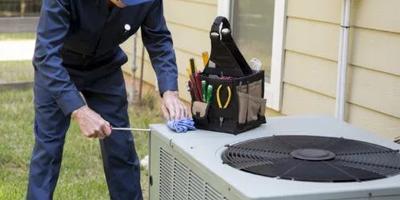


What Is a Refrigerant?
At its core, a refrigerant is a heat-transferring fluid. It’s specifically engineered to absorb heat and release it under controlled conditions. Technically, any liquid that can boil can serve as a heat exchange medium. You’ll find refrigerants in a wide variety of appliances—from air conditioners and heat pumps to fridges and freezers. Without them, none of these systems would be able to operate.
Common Refrigerant Types
Air conditioning has become so common that many homeowners are familiar with refrigerant names, especially if you’ve visited an auto shop or had AC service done recently. These substances are identified by an “R” followed by numbers or letters. For instance, R-718 is the technical term for water. While water once had a place in cooling, it’s rarely used today. Here are the refrigerants currently powering most air conditioners:
R-12
One of the earliest and most recognizable refrigerants, R-12—more commonly known as Freon—was widely used until the mid-1990s. Although it was highly effective, R-12 posed serious environmental threats. When released into the atmosphere, it breaks down in sunlight, releasing chlorine atoms that damage the ozone layer. It’s also a potent greenhouse gas—10,900 times more impactful than carbon dioxide.
R-410a
After the phase-out of R-22 in the 1990s, R-410a became the go-to choice for residential AC systems. It offers better heat transfer performance and doesn’t damage the ozone layer. Compared to R-12, R-410a is also far less harmful as a greenhouse gas—though it's still 2,088 times stronger than carbon dioxide.
R-454b
The newest refrigerant on the market, R-454b, is gaining popularity for its improved efficiency and reduced environmental footprint. It doesn't deplete the ozone layer and is significantly less potent as a greenhouse gas—only 466 times more powerful than CO₂.
Are AC Refrigerants Interchangeable?
Although all refrigerants serve a similar purpose, they’re not interchangeable. Each type has its own pressure characteristics and boiling points, requiring specific system designs. Using the wrong type can damage your AC. To find out what your system uses, check your unit’s outdoor nameplate or look in the original system documentation. Still unsure? The team at Blue Best Plumbing, Heating, Air, & Generators can help you identify the correct refrigerant.
How the Refrigeration Cycle Works
Your air conditioner uses refrigerant to absorb indoor heat and release it outside—thanks to a process rooted in the laws of thermodynamics and fluid dynamics. One of these is the second law of thermodynamics, which states that heat naturally flows from warmer to cooler areas. Another key principle is the relationship between pressure, temperature, and boiling point in liquids.
The refrigeration cycle begins in the outdoor condenser unit. When your AC starts, it sends the refrigerant through an expansion valve that reduces its pressure, temperature, and boiling point. At this point, the refrigerant is a cool liquid—around 40–50°F—and is routed to the indoor evaporator coil.
Inside, the refrigerant moves through the evaporator coil’s metal tubing and fins, while the blower fan circulates warm indoor air across the surface. Because the refrigerant is cooler than the air, it absorbs the heat, cooling the air and gradually warming the refrigerant until it evaporates into a vapor.
That vapor then travels back outside to the compressor, which boosts the refrigerant’s pressure and temperature, raising it to 120–140°F. The hot vapor is then pushed through the condenser coils. There, a fan blows outside air across the coils, transferring heat from the refrigerant to the outdoors. The refrigerant condenses back into a liquid, and the cycle begins again.
What Happens When Your AC Runs Low on Refrigerant?
Running an AC system with insufficient refrigerant can severely damage the compressor, but other warning signs typically show up first. You might see ice forming on the refrigerant lines or notice that the evaporator coil has frozen. This happens because, with less refrigerant in the system, what's left drops to extremely low temperatures due to excess expansion, lowering both pressure and temperature below optimal levels.
Low refrigerant levels also alter the boiling point, which can prevent the refrigerant from vaporizing as intended. When liquid refrigerant reaches the compressor, it can cause internal failure since compressors are designed to handle vapor only.
Your Trusted HVAC Team
If your air conditioner needs a refrigerant recharge or if you're considering upgrading to a system with a more eco-friendly refrigerant, Blue Best Plumbing, Heating, Air, & Generators is here to help. We provide full-service HVAC support throughout Bountiful, UT, including repairs, maintenance, and new installations. Our services also extend to plumbing, indoor air quality solutions, and commercial HVAC. With certified technicians and an A+ BBB accreditation, we’re proud to serve local homeowners with trusted expertise.
So, if you need heating or air conditioning services in Bountiful, Call the experts at Blue Best Plumbing, Heating, Air, & Generators today!