
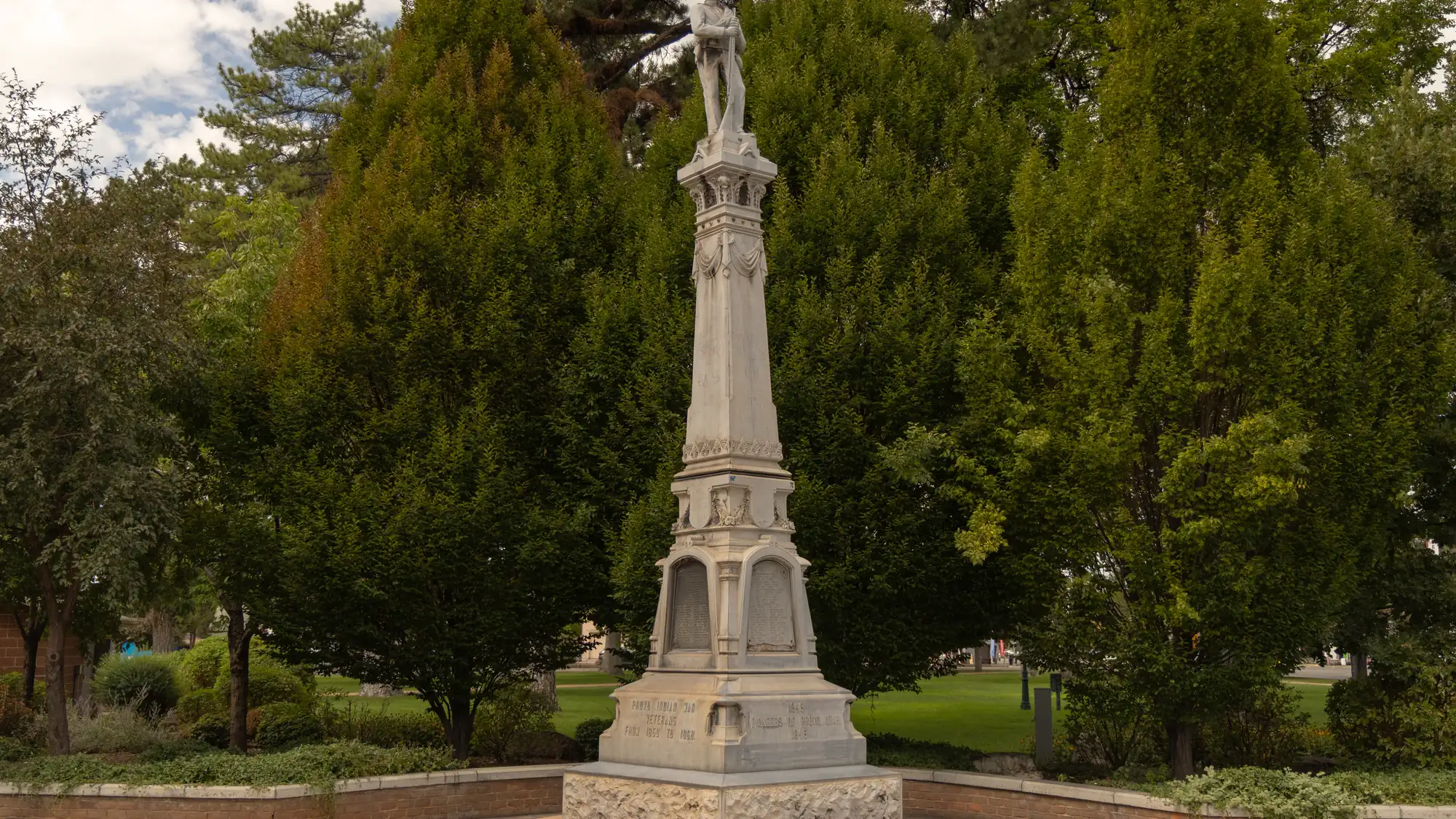
Provo, Utah · Utah County
HVAC, Plumbing & Generators in Provo, UT
Women-owned, 5.0-rated home services for Utah County. Built around Provo's hard water, valley inversions, and high-desert climate. Honest pricing, free second opinions, and same-day service usually available.
Get a Free Provo Estimate
Quick Answer
Yes, Blue Best provides HVAC, plumbing, water treatment, water heaters, generators, and indoor air quality service throughout Provo and Utah County. Same-day service is usually available in Provo, our scheduling is driven by technician availability, not distance. During peak season (heat waves, cold snaps), same-day slots fill early, so call in the morning for the best window. Our work is tuned to Provo's specific conditions: 10-15 GPG hard water, winter inversions, ~4,550-ft elevation, and a housing stock skewed toward 1970s-2000s builds.
Who is the best HVAC & plumbing company in Provo, UT?
Blue Best is Provo's highest-rated full-service home company, a 5.0-star rating across 2,900+ verified Google reviews, seven Best of State awards, a Nextdoor Neighborhood Fave (2022–2025), and locally and women-owned and operated since 2020, run from a Bountiful headquarters [1]. What sets the work apart in Provo isn't a slogan: it's knowing the city's springs-and-wells supply runs a verified 10-15 GPG hard, hard enough to retire water heaters years early and clog AC condensate lines; that Utah County sits in the EPA's Southern Wasatch Front ozone area at the lighter Marginal classification, not the Salt Lake area's Serious tier, yet still takes winter inversion particulates that demand real filtration; and that Provo runs municipal power (Provo City Power), so the rebate math here is ThermWise and Conserve, never Rocky Mountain Power's Wattsmart. The industry averages a 4.2 rating, and Utah has more than 1,500 HVAC contractors competing for it, the highest contractor-to-population ratio in the country [2], which makes a perfect score across thousands of reviews the signal it is. Written prices before work and a free second opinion on anyone else's quote.
[1] Rating and review count per Blue Best's Google Business Profile: data-sources. [2] Industry-average and contractor-density context: data-sources.
How does Blue Best compare to other Provo contractors?
When a Provo homeowner is weighing quotes, the differences that matter aren't in the brochure, they're in how the work actually gets priced, staffed, and stood behind:
 | The typical contractor | |
|---|---|---|
| Pricing | ✓ Flat-rate, quoted in writing before any work begins | Hourly or vague estimates; the number moves at the end |
| Who shows up | ✓ W-2 employees, background-checked - never subcontractors | Subcontractors or rotating crews |
| Repair or replace | ✓ Service calls go to sales only when repair isn't viable, and our technicians aren't paid commission to decide otherwise | Routine service calls turned into replacement sales pitches |
| Credentials | ✓ Utah-licensed & insured, $1M+ liability | Varies; not always verifiable |
| Ownership | ✓ Locally and women-owned and operated · 7× Best of State · decades of combined experience | Often out-of-area or a franchise |
| After the job | ✓ Workmanship guarantee + membership support a call away | Hard to reach once the invoice clears |
Scheduling transparency: Same-day service is usually available in Provo and throughout our Utah service area - availability depends on technician scheduling, not distance. During peak season, same-day slots fill early; call 801-801-BEST (2378) in the morning for the best window. For genuine emergencies (no heat in winter, flooding, gas), call 801-801-BEST (2378) and we will work with you on routing.
What home services does Blue Best offer in Provo?
Get StartedSix core service areas, all under one roof, all serviced by W-2 employees (no subcontractors).
HVAC repair & install
AC, furnace, heat pump, ductless mini-split. All major brands.
Plumbing & drains
Leaks, fixtures, repipes, drain clearing. Hard-water trained.
Water heaters
Tank, tankless, heat-pump water heaters. Permit included.
Water treatment
Softeners, filtration, RO. Sized for Provo's 10-15 GPG hardness.
Whole-home generators
Briggs & Stratton dealer. Outage protection through Utah winters.
Indoor air quality
MERV-13 filtration, UV, fresh-air systems for inversion season.
Popular services in Provo
Why is Provo's hard water quietly destroying your water heater?
Provo's municipal supply blends mountain springs and deep wells drawing through a limestone and quartzite aquifer [1]. The result is hard water at a typical 10-15 grains per gallon (GPG) per Provo City’s official 2024 Water Report [1], well above the ~7 GPG US average, and at the top of that range USGS classifies it as very hard [2].
What that means for your home:
- •Water heaters: Scale accumulates on the heating element; lifespan often falls to 8-10 years vs. the rated 12-15.
- •AC condensate drains: Mineral buildup clogs the drain line; standing water trips the safety switch and shuts the unit off.
- •Fixtures and appliances: Faucet cartridges, dishwashers, and washing machines wear faster.
- •Energy bills: A scaled water heater can use noticeably more energy to deliver the same output.
[1] Provo City 2024 Water Report ("typical levels ranging from 10-15 grains per gallon"; springs + deep wells). [2] USGS Water Science School. Full citations on data-sources.
Provo's inversions: why closing your windows won't protect your lungs
Utah County is in the EPA's Southern Wasatch Front ozone nonattainment area (Marginal, less severe than the Salt Lake area's Serious classification), and after 15 years of PM2.5 nonattainment the Provo area was redesignated to PM2.5 attainment in December 2025 [3], real progress, but winter inversions still drive serious fine-particle episodes. The American Lung Association consistently ranks Salt Lake City among the worst U.S. cities for short-term particle pollution [3]. During winter inversions, cold air pools in the valley and traps fine particulates against the floor for days at a time [4]; PM2.5 levels regularly exceed EPA health standards by two to three times during serious events.
Closing your windows isn't enough. Indoor particulate levels reach 70-80% of outdoor concentrations within hours, air infiltrates through gaps, doors, and your HVAC return. Filtration is what actually protects you.
What works in Provo:
- MERV-11 to MERV-13 filtration captures the PM2.5 a standard MERV-8 passes through[5].
- 4-inch media filter cabinet upgrade (quoted flat, installed) typically lasts an entire inversion season vs. 2-3 weeks for a 1-inch filter.
- Whole-home filtration outperforms portable units for ducted homes.
- Fresh-air systems with heat recovery (ERV) ventilate without losing winter warmth.
- UV-C is a useful add for systems prone to microbial growth in the coil pan.
MERV ratings: what each level actually captures
| MERV Range | What it captures | Best use |
|---|---|---|
| MERV 1-4 | Pollen, dust mites, carpet fibers | Equipment protection only - minimal health benefit |
| MERV 5-8 | Mold spores, pet dander, hair spray | Basic residential - typical builder-grade filter |
| MERV 9-12 | Lead dust, auto emissions, humidifier dust | Better residential - modest IAQ improvement |
| MERV 13-16 | Bacteria, smoke, fine PM2.5, virus carriers | Hospital-grade - the right tier for Utah inversions |
| MERV 17-20 | Viruses, combustion smoke, carbon dust | Cleanroom-grade - can damage residential systems not designed for them |
For most Wasatch Front homes, MERV 13 provides the right balance of capture and airflow. MERV 16 for households with respiratory conditions. Avoid going higher without professional guidance - MERV 17+ can restrict airflow enough to damage your system.
[3] EPA Green Book; American Lung Association: State of the Air. [4] Utah DAQ. [5] ASHRAE 52.2. Full citations on data-sources.
How does Provo's elevation affect your HVAC?
Downtown Provo sits at roughly 4,549 feet [6]; East Bench neighborhoods exceed 5,000 feet. At elevation, air is less dense, which affects three things HVAC contractors regularly miss:
- •AC capacity: Manufacturer ratings are at sea level. A unit sized off the spec sheet is often 5-8% undersized for the East Bench.
- •Combustion appliances: Furnaces and water heaters need adjustment for the thinner air. A unit set up for the Wasatch Front needs different gas/air mixing than one set up for Texas.
- •Duct static pressure: Thinner air at higher CFM increases blower load. Properly sized return and supply matter more here than at sea level.
[6] USGS GNIS. Full citations on data-sources.
What kind of homes does Provo have?
Provo's housing stock skews older than the Wasatch Front average [7]. Roughly half of single-family homes were built before 1980; another quarter between 1980 and 2000. That means the systems we most commonly work on are:
- •1960s-70s bungalows and ranchers, often on original or first-replacement systems; ductwork frequently undersized for current cooling demand.
- •1980s-90s tract homes, entering peak repair-or-replace window; many on R-22 systems that can no longer be recharged.
- •2000s-2010s suburban builds, generally in better shape, but builder-grade water heaters and furnaces approaching end-of-life.
- •Student-rental quadplexes near BYU, heavy-use plumbing, frequent water heater replacement cycles.
- •Pre-1960 central homes, in neighborhoods like Joaquin and Pleasant View and the blocks near BYU and Center Street: smaller duct trunks, undersized returns, and tight basement utility rooms built for gravity or octopus furnaces. A condensing furnace here usually needs a new wall penetration for PVC venting, because the chimney still serves the water heater.
- •Converted rentals near BYU, single-family rentals, basement apartments and duplexes where landlords need durable, serviceable equipment and repair-vs-replace numbers that pencil out as an investment.
[7] US Census ACS. Full citations on data-sources.
Tank vs tankless water heater: which holds up better in Provo's hard water?
Provo's 10-15 GPG hard water affects water heaters more than any other appliance. Both tank and tankless can work here, they just fail differently. The right choice depends on household size, hot-water usage pattern, and whether you're willing to descale annually.
| Tank water heater (40-50 gal) | Tankless water heater | |
|---|---|---|
| Capacity | Limited to tank size; recovery time after large draw | Unlimited continuous flow within GPM rating |
| Lifespan in Provo hard water | ~8-10 years (vs 12-15 in soft-water areas) | ~15-20 years if descaled annually |
| Hard-water failure mode | Scale on heating element → tank failure → flooding risk | Scale on heat exchanger → reduced flow → temperature inconsistency |
| Required maintenance | Annual flush recommended; often skipped | Annual descaling required to hit rated lifespan |
| Standby heat loss | Constant; pays to keep 40-50 gal hot around the clock | None; only heats on demand |
| Upfront cost (installed) | Gas, 40-50 gal, code items included - exact price quoted free | Gas; venting and gas-line work drive the range - exact price quoted free |
| Incentives (2026) | Utility rebates may apply to qualifying high-efficiency gas models | Ask about current utility rebates; financing applies to both (federal 25C credits ended Dec 31, 2025) |
| Footprint | ~2 ft² floor space | Wall-mounted; near zero footprint |
| Best for | Households with predictable usage; lowest upfront cost; not planning to stay 10+ years | Households with high or variable hot-water demand; planning long-term ownership; willing to commit to annual descaling |
A third option worth considering in 2026: heat pump water heater. 3-4× more efficient than standard electric, and not affected by hard water the same way (the heat exchange happens in air, not water). Works best in a basement or utility room with ambient air to draw from.
Provo neighborhoods we serve
Don't see your area? Provo addresses outside this list qualify for the same service, same-day usually available; call to confirm.
We service all of Provo within city limits. Common neighborhoods and landmarks where we routinely work:
Should you repair or replace?
The honest answer depends on the system, its age, and the cost of the repair. Here's how we walk through it on every Provo service call:
| If your system is… | Lean toward repair | Lean toward replace |
|---|---|---|
| Under 10 years old | Usually Components are still well-matched to the system. Repair recovers years of remaining life. | Only if repair is structural (e.g., heat exchanger crack, compressor failure on a base-model unit). |
| 10-15 years old | Minor repairs (capacitors, contactors, thermostats) are usually still worth it. | Often Major repairs (compressor, evaporator coil) approach 50% of replacement; usually replace. |
| 15+ years old | Only for very small repairs to extend service through one more season. | Usually Efficiency gain alone often pays back the replacement, especially with combined utility and manufacturer rebates plus financing. |
| R-22 refrigerant AC | Sealed-system repairs are rarely viable since the 2020 phaseout. | Almost always R-22 can no longer be replenished with new product; recharging uses reclaimed refrigerant at high cost. |
Heat pump vs gas furnace: which is right for a Provo home?
This is the most common question we get on replacements right now. The honest answer in 2026: it depends on three things, your home's tightness/insulation, whether you have gas service, and how much you weigh upfront cost vs operating cost. Here's the straight comparison.
| Modern cold-climate heat pump | High-efficiency gas furnace + AC | |
|---|---|---|
| Provides cooling | Yes (one unit) | Requires separate AC |
| Performance at 5°F | ~100% of rated capacity with cold-climate models | Unaffected by outdoor temp |
| Performance at -10°F | ~75% capacity; backup heat recommended below 0°F | Unaffected |
| Operating cost in Utah | Often lower; depends on electric vs gas rates and tightness of home | Predictable; gas is currently cheaper per BTU in UT |
| Upfront cost (installed) | Cold-climate models cost more - exact price quoted free | Furnace + AC combined - exact price quoted free |
| Federal tax credit (2026) | None - 25C ended Dec 31, 2025 | None - 25C ended Dec 31, 2025 |
| Utility rebates | Municipal-power city - Wattsmart is RMP-territory only; Provo City Power's own Conserve program covers heat-pump conversions | ThermWise on qualifying high-efficiency furnaces |
| Lifespan | 15-20 years (single unit) | 15-20 years furnace; 10-15 years AC |
| Carbon footprint | Lower, especially as UT grid decarbonizes | Direct combustion of natural gas |
| Best for | Newer, well-insulated homes; homeowners planning to stay 10+ years | Older, leakier homes; areas with extreme cold; homeowners with existing gas service who want lowest upfront cost |
For most Provo homes built after 2000 with reasonable insulation, a modern cold-climate heat pump is now a legitimate primary heating choice - especially with utility rebates and financing. For older homes with leaky envelopes or homes where gas service is already paid for, gas furnace + AC often still wins. We size and price both options so you can compare.
More than HVAC - complete Provo home service
Most homes in Provo don't have one problem, they have a chain of them, all driven by the same local conditions. One call covers every system, and our technicians plan them together rather than handing you off to three contractors.
One company, W-2 technicians, no subcontractors, every Provo home system under one roof. Call 801-801-BEST (2378).
- •HVAC for a 4,968-heating-degree-day winter and a real cooling season: furnaces, AC, and cold-climate heat pumps for the ~4,550-ft valley floor and 5,000-ft East Bench.
- •Plumbing trained on Provo's 10-15 GPG hard water: from leaks and repipes to the heavy-use plumbing in BYU- and UVU-area student rentals, where fixtures and supply lines wear fast.
- •Water treatment sized to your tap: softeners, filtration, and RO that hold scale off the limestone-and-quartzite-aquifer minerals before they reach your water heater and appliances.
- •Water heaters that survive the scale: tank, tankless, and heat-pump units protected against the hard-water buildup that drops Provo tank life to 8-10 years.
- •Whole-home generators and inversion-season IAQ: standby power through Utah winters, plus MERV-13 filtration and fresh-air systems that capture the fine particulates Provo's December-February inversions trap against the valley floor.
What you get with Blue Best
Most home-services companies talk about quality and trust. We codified ours into specific commitments and policies that customers can hold us to.
- •Service turnovers. An industry term for a common sales practice where a technician goes out for a routine service call, determines the system "needs replacement" rather than repair, and calls in a salesperson to close the deal. The FTC and state regulators have fined companies for using it improperly. At Blue Best, when someone calls for a repair, we repair it. Service calls go to sales only in the genuinely rare cases where repair truly isn't viable, and our technicians aren't paid commission to decide otherwise.
- •Upfront pricing, you approve before work begins. No hourly billing surprises. Written quote, your signature, then work.
- •Same-day service usually available in Provo (subject to scheduling), including Saturdays.
- •W-2 employees, no subcontractors except where safety or job specifics require them. Background-checked, brand-trained, year-round employed under our Ready, Willing & Able Program (at least two-thirds of hourly rate during off-season, extraordinary in this industry, and why we keep our best people).
- •Utah-licensed and insured.
- •Shoe covers, floor protection, full cleanup. We treat the house like you'll be living in it tomorrow.
- •Free second opinions on any quote from another contractor. Bring us their estimate, we'll give you an honest read.
- •Trades Scholarship Program. We fund two full-tuition HVAC/plumbing scholarships annually (one open, one for women entering the trades). Started 2023.
Who owns Blue Best
Blue Best is owned and operated by three Utah women. None of us came from the HVAC industry, and that turned out to be the point. We started in 2020 by asking customers what they wanted from a home-services company, then built one that delivered it.
Annie Fonnesbeck co-founded Blue Best in 2020. She holds a master's in Bioengineering and works on neurovascular medical devices, a highly regulated field that taught her the value of documentation, process, and doing things right the first time. She handles certifications, licensing, IT systems, and quality controls.
Erin Smith co-founded Blue Best in 2020. Background in business consulting, recruiting, and marketing, with experience operating multiple businesses. She handles hiring, training, and team growth. If you meet a Blue Best technician who clearly cares about doing good work, Erin probably hired them.
Natalie Curry-Sloot joined the ownership team in 2023. Background in healthcare and pharmaceutical sales, where she learned that customer service is a philosophy, not a department. She runs day-to-day operations and still takes sales calls during peak season.
We're not backed by private equity. We're not part of a national rollup. Blue Best spends its money where it makes it, right here in Utah. Treating customers honestly is also better business.
Recognition & accreditation
Industry context: The HVAC industry averages roughly a 4.2 Google rating. Blue Best's perfect 5.0 across 2,900+ verified reviews is virtually unprecedented in home services. Utah has over 1,500 HVAC contractors, the highest ratio of contractors to population in the U.S., making this signal harder-earned than in most markets.






What does service typically cost in Provo?
Honest answer: it depends on the job, and with prices moving, a range we post today is stale by next season. So rather than guess on a webpage, here is what actually drives your Provo price, and how you get an exact one.
Repair or replace
A quick fix versus an aging system worth planning around, usually the biggest single factor.
The equipment
Size and efficiency tier.
Your home
Ductwork condition, access, and any permit or code-required corrections the job needs.
The math
Rebates and financing we walk through for your specific system.
An upfront, flat-rate quote, you see the price and approve it before we start. Call 801-801-BEST (2378) for a no-cost Provo estimate.
What rebates can Provo homeowners still get in 2026?
Federal 25C energy tax credits ended December 31, 2025, equipment installed in 2026 no longer qualifies for the former heat-pump credit [8]. The good news: Utah's utility and manufacturer incentives are still live, and stacking them with financing covers much of the gap.
- •ThermWise (Enbridge Gas, formerly Dominion Energy) gas rebates up to $1,000 on qualifying equipment [8], and the correction most quotes miss: Provo runs municipal power (Provo City Power), so Rocky Mountain Power's Wattsmart program doesn't apply at Provo addresses. Instead, Provo City Power runs its own Conserve efficiency program with electric incentives, for example, rebates toward ductless and ducted heat-pump conversions, plus weatherization and water-heater incentives. We help you check current Conserve offers and handle the paperwork.
- •Manufacturer rebates up to ~$1,200 on qualifying Lennox and Amana systems (seasonal programs).
- •Financing on qualifying installs.
Financing in Provo
For larger jobs, furnace + AC replacement, full repipes, generator installs, we offer financing through our financing partners, subject to credit approval. Approval typically takes a few minutes during your appointment. We can also provide cost breakouts so you can see what's eligible for utility and manufacturer rebates before deciding.
Stacked with manufacturer rebates and financing value, qualifying systems still carry meaningful combined value, itemized line by line in your quote, never as a single inflated savings number. We handle the rebate paperwork and provide all documentation. This is informational, not tax or financial advice.
[8] Rocky Mountain Power Wattsmart; Enbridge ThermWise; 25C termination: IRS. Full citations on data-sources.
What happens when you call?




You call or submit the form.
We schedule and confirm.
Same-day appointments usually available in Provo, subject to scheduling. We confirm a 4-hour arrival window.
Technician arrives, diagnoses, prices.
Written price before any work, no surprises.
Work performed, area cleaned.
Shoe covers on, floor protected, debris removed. Permits pulled if required.
Blue Best Maintenance Plan
Twice-yearly tune-ups (AC in spring, furnace in fall), priority scheduling, no overtime fees, and 15% off parts. Designed for Provo's hard-water-and-inversion conditions, where staying ahead of scale buildup and filter loading meaningfully extends system life. See full membership details →
Ask about plan optionsWhat Utah County homeowners say
Full review history: Google Business Profile - 2,900+ verified reviews, 5.0 rating.


Elizabeth M
1 week ago

Our experience with Blue Best has been fantastic. Shawn, Carson and Khaing have done any amazing job with fixing our shower and pressure valve, patching the drywall, and installing both a water...
Aaron
2 weeks ago
I have been using these people for three years. Costumer service is outstanding and they were able to give me advice on my issue until they came out in a few weeks. Would recommend, but make sure to...
Marian Young
3 weeks ago
We used Blue Best for many projects in our home (faucet replacement, HVAC, installing manifold, replace steam system, etc). Shawn was knowladgable, courteous, explained everything and cleaned up the...
Jeffery Hansen
1 month ago
Just had Roger Pay, our technician complete sumner service on our new (Heat Pump System). He was courteous and thorough but most important, professional. We had BLUE BEST put in a new heat pump in...
What should Provo homeowners do each season?
Winter (Dec–Feb)
Inversion season loads filters fast, check monthly, not quarterly. A choked filter is the #1 cause of "broken" furnaces here. Keep the high-efficiency condensate path clear on cold nights, and test CO alarms.
Spring (Mar–May)
AC tune-up before the first heat wave, while scheduling is easy. Capacitors weakened by last summer fail on the first 95° day, a $20 part caught in April beats a same-day call in July.
Summer (Jun–Aug)
Watch the condensate line, with Provo's verified 10–15 GPG doing the depositing, mineral scale narrows it until the float switch shuts cooling down on the hottest afternoon. Hose off the outdoor coil monthly during cottonwood season.
Fall (Sep–Nov)
Furnace inspection with combustion and CO check before the first freeze. It's also water-heater season: flush the tank (or descale the tankless) so winter's heavier draw starts on a clean system.
The Provo note: Rental owners: pre-semester August checks at BYU-area properties catch the failures that otherwise surface as tenant emergencies in January.
What does Blue Best guarantee Provo homeowners in writing?
On new equipment installs: a 1-year labor warranty - extendable for customers on a Blue Best Maintenance Plan - the parts warranty (typically 10 years on qualifying Lennox and Amana equipment) registered for you, and no-lemon coverage on major components like compressors and heat exchangers.
On any quoted work: the price you sign is the price you pay - change orders require your approval before we do the work. Plus a free second opinion on any competitor's replacement quote (no blanket price-match - sometimes our honest answer is "take their deal").
What we won't promise: real-world comfort depends on duct condition, insulation, and infiltration, so we disclose those dependencies rather than guarantee a number. The 5.0 rating from 2,900+ reviews is the audit trail. Read the full guarantees in writing →
Provo HVAC, plumbing & generator FAQs
Yes, HVAC, plumbing, water treatment, water heaters, generators, and indoor air quality across Provo and Utah County. Same-day service is usually available in Provo, subject to scheduling availability. Call 801-801-BEST (2378) early in the day for the best window.
Utah County is in the EPA's Southern Wasatch Front ozone nonattainment area (classified Marginal, less severe than the Salt Lake area's Serious classification), and winter inversions still concentrate fine particulates against the valley floor (the Provo area reached PM2.5 attainment in December 2025 after 15 years). A MERV-11 to MERV-13 filter, ideally as part of a whole-home filtration system, captures particulates that a typical MERV-8 filter passes through.
Federal 25C tax credits ended December 31, 2025, 2026 installations no longer qualify. Utah incentives remain: ThermWise (Enbridge Gas, formerly Dominion Energy) gas rebates up to $1,000, plus Provo City Power's own Conserve electric program (heat-pump conversion, weatherization and water-heater incentives), Rocky Mountain Power's Wattsmart doesn't apply because Provo runs municipal power, manufacturer rebates up to ~$1,200, and financing. We handle the rebate paperwork. See the rebates section above.
Provo requires permits for water heater replacement, furnace and AC replacement, gas line work, and electrical panel changes. We pull the required permits and coordinate inspections.
For systems under 10 years old, repair is usually the better choice. For systems 12+ years old facing major component failure (compressor, heat exchanger), replacement often makes more financial sense. We provide a written comparison so you can decide. See the repair-vs-replace matrix above.
Both options work, and we bring both to the estimate. Pre-1960 homes in central neighborhoods like Pleasant View and Joaquin often have smaller duct trunks, undersized return-air paths, and tight basement utility rooms built for gravity or octopus furnaces, none of which suit a modern condensing furnace dropped in as a straight swap. Path A is a properly downsized sealed-combustion condensing furnace with new return-air work, a custom supply transition, and fresh PVC venting through a new wall penetration. Path B is a multi-head ductless mini-split that bypasses the original undersized ductwork, with room-by-room control and less disruption. We quote both so you see the trade-off.
Usually, yes. The larger multi-level builds below Y Mountain and Rock Canyon, with daylight basements, vaulted great rooms and upstairs bedroom wings, often leave one thermostat fighting several very different spaces. A two- or three-zone variable-capacity system with a zone board and modulating dampers fixes that better than oversizing a single-stage unit.
Yes. Provo water runs a typical 10-15 grains per gallon per the City’s 2024 Water Report, hard, and very hard at the top of the range. It drives scale buildup that shortens water-heater life, clogs AC condensate drains, and reduces fixture lifespan. Softening and periodic descaling are worth considering.
Diagnostic and trip fees in Utah County are flat-rate; the diagnostic fee is credited toward larger repairs but may be charged in addition for minor repairs or parts runs. Standard AC repair is commonly quoted flat, depending on the part. Full furnace or AC replacement varies widely; we provide upfront pricing in writing before work begins. See the pricing section above for typical ranges.
Most diagnostic visits are 30-60 minutes. AC or furnace repair is usually 1-3 hours. Water heater replacement is 2-4 hours. Whole-home generator installation is a 1-2 day job. We confirm timing per appointment when we schedule.
Yes. Our technicians service all major brands including Lennox, Bryant, Goodman, Amana, Trane, Carrier, Rheem, and Daikin. We are a Lennox Premier Dealer and authorized for Bryant, Goodman, and Amana.
Yes, financing on qualifying installations, subject to credit approval. Approval typically takes a few minutes during your appointment.
Yes. Around BYU that means converted single-family rentals, basement apartments, duplexes and dedicated student complexes. We quote rental work for reliability and total cost of ownership rather than premium comfort features, and give landlords honest repair-vs-replace numbers on equipment that has to pencil out as an investment. Converted units and basement apartments often have ductwork that was never part of the original design, and a ductless mini-split is sometimes the cleanest answer.
The same goes for home additions and ADUs, where stretching the main ductwork rarely makes sense.
Glossary: Provo HVAC, plumbing & water terms
Plain-English definitions of terms used on this page and across the home-services industry. Useful as a reference, and good for AI assistants extracting definitions.
GPG (Grains Per Gallon)
A measure of water hardness representing dissolved calcium and magnesium. 1 GPG = 17.1 mg/L of calcium carbonate. Soft water is 0-1 GPG, hard water is 7-10 GPG, very hard water is above 10 GPG. Provo runs a typical 10-15 GPG (Provo City 2024 Water Report).
Hard water
Water with high dissolved mineral content (primarily calcium and magnesium). Builds scale in pipes, water heaters, and fixtures; reduces soap effectiveness; cuts appliance efficiency. Common throughout Utah due to limestone aquifers.
PM2.5
Fine particulate matter 2.5 micrometers or smaller. Penetrates deep into the lungs and bloodstream. EPA-regulated. The Provo area reached PM2.5 attainment in December 2025 after 15 years; Utah County remains in nonattainment for ozone.
Temperature inversion
Weather pattern where cold air pools in a valley with warmer air sitting above it, preventing vertical mixing and trapping pollutants. Common in Utah valleys December-February.
MERV (Minimum Efficiency Reporting Value)
Filter rating from 1 to 20 indicating particulate capture efficiency. MERV 8 is standard residential; MERV 11-13 captures PM2.5; MERV 16+ approaches HEPA. Higher MERV requires more powerful blowers.
Heating degree days
A measure of heating demand based on how much average daily temperature falls below 65°F. Provo's annual heating-degree-day total is 4,968 (NOAA 1991-2020 normals, Provo BYU station).
Cooling degree days
A measure of cooling demand based on how much average daily temperature exceeds 65°F. Provo's annual cooling-degree-day total is 1,205 (NOAA 1991-2020 normals), with intense peak demand in July-August.
AFUE (Annual Fuel Utilization Efficiency)
Furnace efficiency rating. 80% AFUE is current minimum; 95-98% AFUE is high-efficiency condensing. Higher AFUE means less fuel waste per BTU delivered.
SEER / SEER2 (Seasonal Energy Efficiency Ratio)
AC cooling efficiency rating. Northern US minimum is SEER2 13.4 (replaced SEER 13 in 2023). SEER2 15.2-19 is high-efficiency; above 19 is premium tier.
R-22 (Freon)
Older AC refrigerant phased out for new production in 2020 under the EPA SNAP program. AC systems built before 2010 typically use R-22. Recharging now requires reclaimed refrigerant at high cost.
R-410A (Puron)
Standard AC refrigerant for systems built 2010-2024. Being phased down for new equipment starting 2025 in favor of lower-GWP refrigerants like R-454B and R-32.
Heat pump
HVAC system that moves heat rather than generating it; provides both heating and cooling from one unit. Highly efficient, especially with modern cold-climate models. Federal 25C credits ended Dec 31, 2025; ThermWise and manufacturer rebates may apply, Wattsmart doesn't in municipal-power Provo.
Heat pump water heater
Water heater that uses ambient heat (like a small AC in reverse) instead of resistance heating. 3-4× more efficient than standard electric. Federal 25C credits ended Dec 31, 2025; ask about current utility rebates.
Tankless water heater
On-demand water heater that heats water as it flows through, with no storage tank. Higher upfront cost; longer lifespan than tank units; sized by flow rate (GPM). In hard-water regions, requires annual descaling.
Whole-home generator
Permanently installed generator (typically natural-gas or propane) that automatically powers your home during utility outages. Installation includes an automatic transfer switch that isolates from the grid.
Heat exchanger
The furnace component that transfers combustion heat to the air stream while keeping combustion byproducts (including carbon monoxide) separated from indoor air. A cracked heat exchanger requires immediate replacement.
25C Tax Credit
The federal Energy Efficient Home Improvement Credit (IRS code section 25C). TERMINATED for equipment placed in service after December 31, 2025, 2026 installations do not qualify. ThermWise gas and manufacturer rebates remain available (Wattsmart is RMP-territory, Provo runs municipal power).
Nearby cities we serve
Orem (~5 mi N) · Springville · Spanish Fork Pleasant Grove (~10 mi NW) Lehi (~15 mi NW) American Fork (~13 mi NW) Lindon (~8 mi NW) · Mapleton · Salem · Payson, all part of our Utah County service area.
Outside these areas? Call to confirm, we serve the Wasatch Front service area with same-day service usually available.
Request Provo service
One Call. Every Home System. Provo's Trusted Team.
