
Key takeaways
- Water heater problems are a common reason Utah homeowners call a plumber - know the warning signs before you're taking cold showers
- Utah's hard water accelerates plumbing wear (see our Water Treatment guide for solutions)
- Emergency plumbing exists for a reason - know when to call immediately vs. when it can wait until morning
- Licensed plumbers matter - Utah requires licensure for good reason, and permits protect you
- Preventive maintenance costs less than emergency repairs
- Utah's plumbing faces challenges most of the country doesn't understand. Our hard water - 7-18 grains per gallon - shortens water heater life, clogs fixtures, and damages pipes years faster than normal. Our freeze-thaw cycles strain plumbing in external walls and outdoors. Our rapid growth means aging infrastructure in established neighborhoods and sometimes rushed installations in new developments.
Most people don't think about plumbing until something goes wrong. That's understandable - when pipes work, they're invisible. But plumbing problems can be hard to announce themselves politely. They announce themselves at 2 AM with water pooling on the basement floor, or on Thanksgiving morning when the garbage disposal dies, or gradually through a water bill that keeps climbing for reasons you can't explain.
At Blue Best, we've been handling plumbing emergencies and routine service across the Wasatch Front since 2021. We've earned back-to-back Best of State awards for Plumbing (2025, 2026) and maintain a perfect 5.0 Google rating across 2,900+ reviews - recognition that reflects the same commitment to honest service that built our HVAC reputation. Plumbing and HVAC share more than you might think: both are essential home systems that homeowners rely on daily and rarely understand deeply.
This guide covers what Utah homeowners actually need to know - from water heaters to drain cleaning to emergency response. Not a sales pitch. Just practical information to help you make better decisions about your home.
Water Heaters: The Appliance You Forget Until It Fails
Your water heater works every hour of every day, all year. It's probably in your basement or garage, quietly doing its job while you forget it exists. Until the morning you turn on the shower and nothing but cold water comes out.
Types of Water Heaters
Tank water heaters store and continuously heat a reservoir of water (typically 40-80 gallons). They're the most common type in Utah homes - reliable, relatively affordable, and well-understood by most plumbers.
Tankless water heaters heat water on demand as it flows through the unit. They never run out of hot water and use less energy when demand is low, but cost more upfront and require specific installation considerations.
Tank water heaters dominate Utah homes for good reason. They're less expensive to purchase and install, work with existing infrastructure, and provide reliable hot water for typical household demand. The tradeoff: they continuously heat water whether you're using it or not, and when the tank empties, you wait for recovery.
Tankless water heaters have gained popularity, but they're not automatically "better." They make sense for some households. They don't make sense for everyone and can be a challenge in homes with hard water that would require frequent descaling.
Warning Signs Your Water Heater Is Failing
Don't wait for complete failure. Watch for:
- Lukewarm water - heating element problems or sediment buildup
- Rusty or discolored water - tank corrosion, especially concerning with older units
- Rumbling or popping sounds - sediment hardening at the bottom of the tank
- Water pooling around the base - tank failure may be imminent
- Age over 10-12 years - standard tank water heaters rarely last longer in Utah's hard water
The average tank water heater lasts 10-15 years. In Utah, hard water often pushes that toward the lower end. If your unit is approaching 10 years, start planning - replacement on your schedule beats emergency replacement on a Sunday morning.
Water Heater Maintenance
Annual maintenance extends water heater life:
- Flush the tank - removes sediment that reduces efficiency and accelerates wear
- Test the T&P valve - the temperature and pressure relief valve is a critical safety device
- Check the anode rod - this sacrificial rod protects the tank from corrosion; replace when depleted
- Inspect for leaks - catching small problems early prevents catastrophic failure
Verified hardness by community (grains per gallon)
Figures from each supplier's published water-quality report, as recorded in Blue Best's data-sources registry; hardness varies by source and season, and some well-served zones run higher than the published range.
| Community | County | Published hardness |
|---|---|---|
| Brigham City | Box Elder | 17-20 (city-published) |
| Layton | Davis | 10-18 (WBWCD verified) |
| Bluffdale | Salt Lake | ~11.1 (city CCR) |
| Herriman | Salt Lake | 10-12 (winter JVWCD) / wells 25-60 (peak blend) |
| Kearns | Salt Lake | ~11.2 (KID CCR) |
| Magna | Salt Lake | ~11 (Magna WD CCR) |
| Midvale | Salt Lake | ~11 (Midvale CCR) |
| Murray | Salt Lake | 11.4 (city CCR) |
| Riverton | Salt Lake | ~11 (city CCR avg) |
| Salt Lake City | Salt Lake | 7.1-11.6 by treatment plant (sources to ~28.6) |
| South Jordan | Salt Lake | 7-10 (city-published) |
| West Jordan | Salt Lake | ~11 (WJ CCR) |
| Stansbury Park | Tooele | 22.22 (district FAQ) |
| American Fork | Utah | 12.38 (published, hard) |
| Highland | Utah | 14 (city-published, very hard) |
| Orem | Utah | 5.7-9.9 (ground) / 7-25 (surface) |
| Provo | Utah | 10-15 (typical) |
| Saratoga Springs | Utah | 8.3 (published, moderately hard) |
Drain Cleaning: Beyond the Plunger
Slow drains are annoying. Completely blocked drains are emergencies. Understanding the difference - and knowing when DIY solutions work versus when you need professional help - saves money and prevents damage.
What Causes Drain Problems
Kitchen drains clog from grease, food particles, and soap residue. Grease is the worst offender - it goes down liquid and solidifies in your pipes, gradually narrowing the passage until water can't flow.
Bathroom drains clog from hair, soap scum, and toothpaste. The combination creates a stubborn blockage that builds over months.
Main sewer lines clog from tree roots, accumulated debris, or pipe damage. These are serious problems that affect the whole house and require professional equipment to diagnose and resolve.
When DIY Works
- Plunger - effective for simple clogs near the drain opening
- Drain snake - reaches 15-25 feet into pipes for hair clogs and minor obstructions
- Baking soda and vinegar - helps with minor buildup and odors (not effective for real clogs)
- Enzyme cleaners - maintain clear drains; not strong enough to clear existing blockages
When to Call a Professional
- Multiple drains clogging simultaneously - may indicate main line problems
- Water backing up into other fixtures - serious blockage requiring professional equipment
- Recurring clogs despite clearing - underlying issue needs diagnosis
- Sewage smell - potential sewer line damage or venting problems
- Gurgling sounds from drains - venting issues or main line obstruction
MYTH: Chemical drain cleaners are a good solution for clogs.
FACT: Chemical drain cleaners can damage pipes, harm septic systems, and create dangerous conditions for plumbers and homeowners working on your system later. They're also ineffective against serious clogs. Professional hydro-jetting or mechanical clearing is safer and more effective.
Leak Detection and Repair
Water damage is the second most common homeowner insurance claim - and most leaks start small. A dripping faucet wastes water and money. A hidden slab leak can destroy your foundation. Knowing the signs of leaks prevents small problems from becoming catastrophic.
Signs of Hidden Leaks
- Unexplained increases in water bills - often the first indicator of hidden leaks
- Sound of running water when nothing is on - check by turning off all fixtures and listening
- Wet spots on floors, walls, or ceilings - water travels; the wet spot may not be directly below the leak
- Mold or mildew smell - indicates moisture accumulation somewhere in the structure
- Cracks in foundation - can indicate slab leak causing soil movement
- Hot spots on floor - may indicate hot water line leak under slab
Types of Leaks
Fixture leaks - faucets, toilets, showerheads. Usually visible, often DIY-repairable with basic tools and parts.
Supply line leaks - pipes feeding fixtures. May be hidden in walls; require shutoff and repair.
Drain leaks - waste pipes. Often go unnoticed longer because water drains away from living spaces; can cause significant hidden damage.
Slab leaks - pipes running under or through your foundation. Serious and expensive to repair; detection requires specialized equipment.
A toilet that runs constantly can waste 200+ gallons per day - that's 6,000 gallons per month showing up on your water bill.
Emergency Plumbing: When to Call Now
Not every plumbing problem is an emergency. But some situations require immediate professional response to prevent serious damage.
True Emergencies - Call Immediately
- Burst pipes - shut off main water supply, then call
- Sewage backup into home - health hazard requiring immediate response
- Gas smell near water heater - leave the house, call gas company first, then plumber
- No water to entire house - may indicate main line break or serious supply issue
- Flooding from any source - shut off water supply, then call
Urgent But Can Wait Until Morning
- Single fixture not working - inconvenient but not damaging
- Slow drains - annoying but not getting worse overnight
- Dripping faucet - wastes water but won't cause immediate damage
- Running toilet - wastes water but can wait for regular service hours
What to Do While Waiting
- Know your main water shutoff location - every household member should know this
- Shut off water to the affected fixture - isolation valves under sinks and behind toilets
- Don't use affected fixtures - prevents additional damage
- Document damage - photos help with insurance claims
- Remove valuables from wet areas - prevent additional losses
Utah-Specific Plumbing Considerations
Hard Water Impact
Utah has hard water. Mineral content varies across the Wasatch Front, but most communities see 7-18 grains per gallon.
Hard water affects plumbing by:
- Accelerating water heater wear - sediment accumulates faster, reducing efficiency and lifespan
- Building scale in pipes - gradually reducing flow and increasing pressure
- Damaging fixtures - mineral deposits clog aerators and showerheads
- Reducing appliance lifespan - dishwashers, washing machines, and ice makers suffer
For solutions to Utah's hard water problem, see our complete Water Treatment Guide.
Freeze Protection
Utah winters freeze pipes. Vulnerable areas include:
- Exterior walls with plumbing
- Unheated spaces (garages, crawlspaces, attics)
- Outdoor hose bibs
- Pipes near windows or poorly insulated areas
Prevention:
- Disconnect and drain outdoor hoses before first freeze
- Insulate exposed pipes in unheated areas
- Know how to drip faucets during extreme cold
- Keep cabinet doors open under sinks on exterior walls during cold snaps
What Does This Cost? A Realistic Guide
The price of plumbing work depends on how easy the pipe is to reach and the type of fixture involved. Clearing a single-fixture drain costs less than a main line, and snaking is cheaper than hydro-jetting. A water heater's style matters, as tankless models may require venting and gas-line modifications. After-hours or holiday timing adds to the cost, and drywall repair following access work is an extra expense. Blue Best quotes an exact price in writing before any work begins.
Choosing a Plumber
What to Look For
- ✓Licensing - Utah requires plumbers to be licensed. Ask for license numbers and verify with the state.
- ✓Insurance - Liability insurance protects you if something goes wrong.
- ✓Transparent pricing - Get estimates before work begins. Be wary of plumbers who won't quote prices.
- ✓Reviews and reputation - Check Google reviews, ask neighbors, look for patterns in feedback.
- ✓Warranty on work - Reputable plumbers stand behind their repairs.
Red Flags
- ✕Won't provide written estimates
- ✕Pressure to decide immediately
- ✕Demands full payment upfront
- ✕Can't provide license number
- ✕No physical business address
- ✕Dramatically lower prices than competitors (often means hidden fees later)
The Blue Best Approach
Blue Best has served Utah homeowners since 2021, earning back-to-back Best of State awards for Plumbing and maintaining a perfect 5.0 Google rating across 2,900+ reviews. Our plumbing services reflect the same values that built our HVAC reputation:
- Honest diagnosis - we tell you what's actually wrong, not what generates the biggest invoice
- Transparent pricing - you know the cost before we start work
- Licensed professionals - our plumbers are licensed, insured, and background-checked
Emergency service - because pipes don't wait for business hours
- Workmanship warranty - we stand behind our repairs
Fighting Utah's hard water? See our Water Treatment guide for softeners and filtration that protect your plumbing.
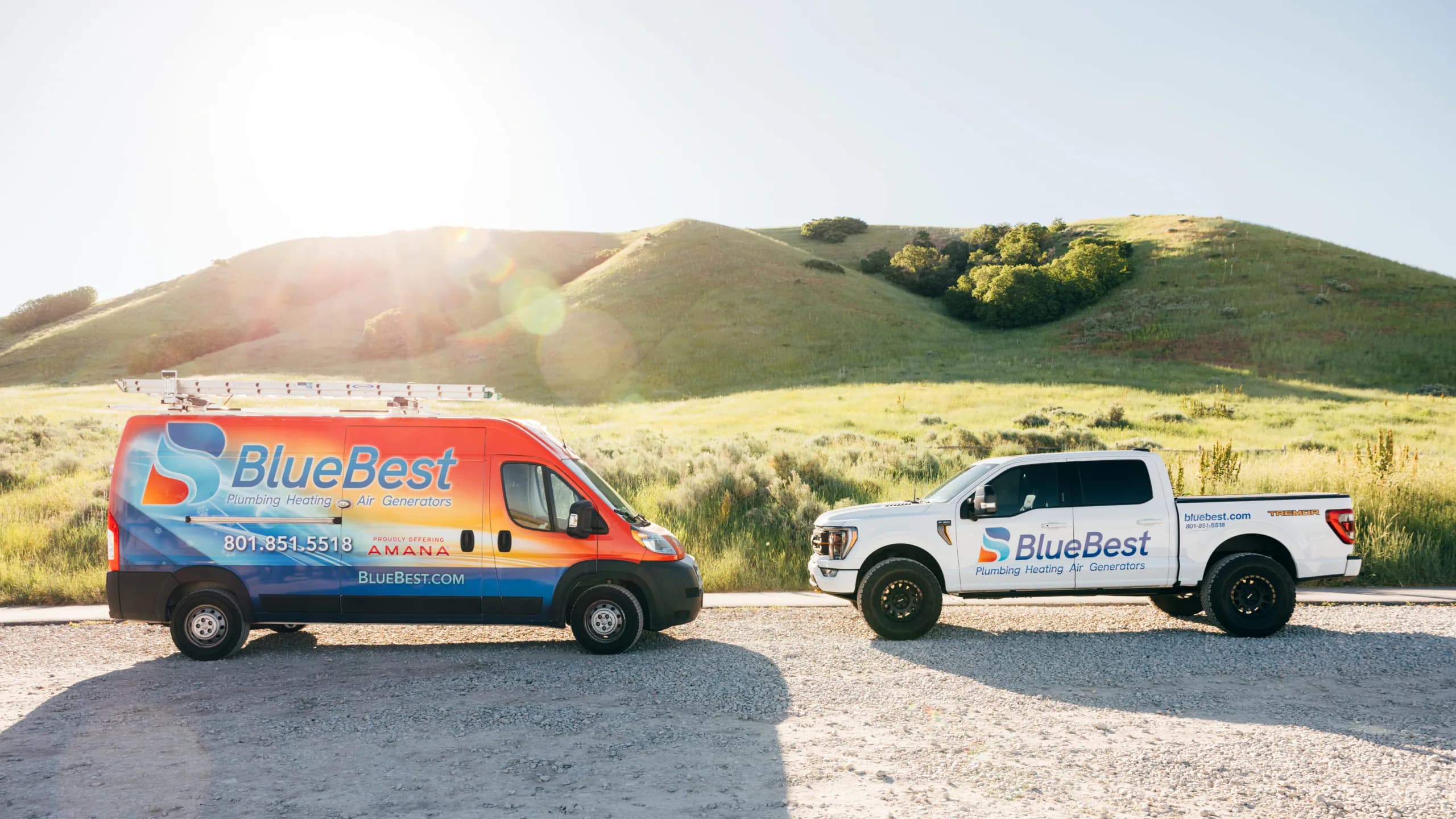
Need a plumber?
Emergency service available. Regular service calls answered promptly.
Blue Best Plumbing, Heating, Air & Generators
Call 801-801-BEST (2378)
Serving Salt Lake, Utah, Davis, Weber, Tooele & Summit Counties
Alpine • American Fork • Bear River • Bluffdale • Bountiful • Brigham City • Cedar Hills • Cedar Valley • Centerville • Clearfield • Clinton • Copperton • Corinne • Cottonwood Heights • Draper • Eagle Mountain • Eden • Farmington • Fruit Heights • Granite • Grantsville • Harrisville • Herriman • Highland • Hill AFB • Holladay • Hooper • Huntsville • Kaysville • Kearns • Lake Point • Layton • Lehi • Lindon • Magna • Mantua • Midvale • Millcreek • Morgan • Murray • North Ogden • North Salt Lake • Ogden • Orem • Oquirrh • Park City • Perry • Pleasant Grove • Pleasant View • Provo • Riverdale • Riverton • Rose Park • Roy • Salt Lake City • Sandy • Saratoga Springs • South Jordan • South Ogden • South Salt Lake • South Weber • Sugarhouse • Syracuse • Taylorsville • Tooele • Uintah • Vineyard • West Haven • West Jordan • West Point • West Valley City • West Weber • White City • Willard • Woods Cross
SLC Neighborhoods: The Avenues • 9th & 9th • Marmalade • Capitol Hill • East Bench