
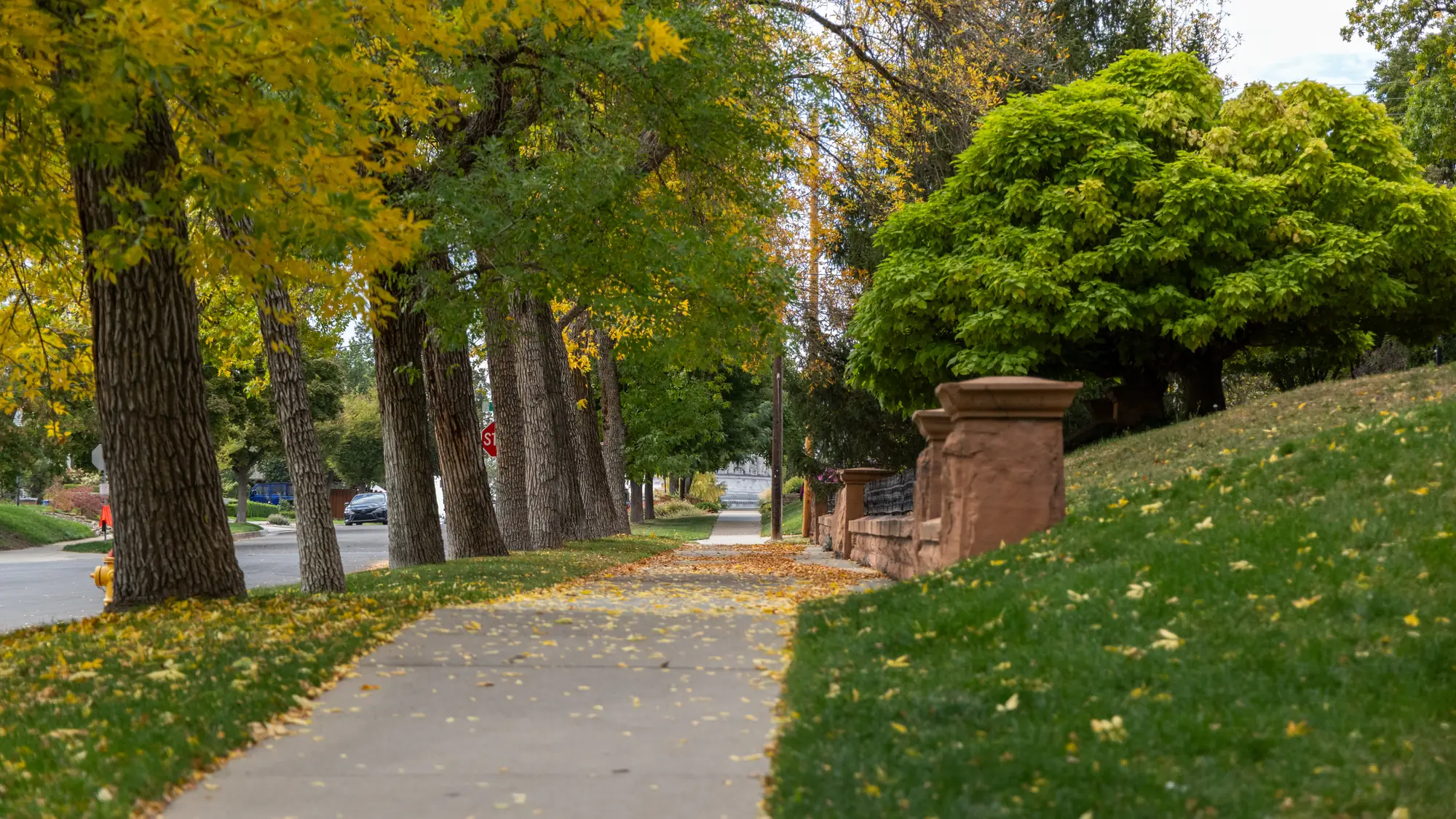
The Avenues, Salt Lake City · Historic-home retrofit specialists
HVAC & Plumbing for Historic Homes in The Avenues
The Avenues is roughly a hundred blocks of 1880–1930 homes, Victorians, brick four-squares, and bungalows on tight bench lots, many with their original boilers and radiators and no ductwork at all. That is not a Salt Lake City house with a different ZIP code; it is a different HVAC problem. Blue Best treats it as the job: converting that old boiler-and-radiator system to modern, efficient heat (and cooling), adding cooling without carving up plaster, and placing equipment so the streetscape stays intact.
Get a Free Avenues Estimate
Quick Answer
Yes, Blue Best specializes in converting historic boiler-and-radiator homes to modern HVAC, plus plumbing work, for the historic homes of The Avenues, with same-day service usually available, subject to scheduling. The Avenues sits within the Salt Lake City service area where SLC homeowners have named us Best of SLC three years running (2024–2026). What makes this neighborhood different: 1880–1930 construction with original radiators and no ducts, lath-and-plaster walls, balloon framing, and Avenues Historic District rules on what the exterior can look like.
What home services does Blue Best offer in The Avenues?
Get StartedBoiler & radiator conversions
Converting the hydronic systems original to most Avenues homes to modern, cooling-capable heat.
Ductless & high-velocity AC
Cooling for homes that never had ducts, mini-splits and small-duct systems routed through existing cavities.
Boiler-to-heat-pump
Ducted, ductless, or air-to-water conversions that can keep your radiators and add cooling.
Plumbing & repipes
Galvanized replacement and water heaters threaded into tight historic mechanical rooms.
Whole-home generators
Standby power for the bench's wind-exposed, aging-grid pockets above the city.
Indoor air quality
MERV-13 filtration and ventilation, the biggest payoff is in leaky pre-1930 homes.
Why are Avenues homes a different HVAC problem?
Walk any block of the Avenues and you are looking at homes built roughly between 1880 and 1930, a National-Register concentration of Victorians, brick four-squares, balloon-framed cottages, and 2.5-story bungalows on tight bench lots [1]. They were built before central air, before modern wiring, and in most cases before anyone imagined a duct. That single fact reshapes every job:
The wrong contractor calls all of this an obstacle and quotes you a teardown. We call it the specialty.
- •Original boilers and radiators. The heat came from a coal-then-gas boiler driving cast-iron radiators, not a furnace and ducts. Much of that hydronic equipment is still running, which makes converting that aging boiler-and-radiator system, not furnace work, the heart of the heating work here.
- •No original ductwork. There is nowhere to "just add a return." Cooling and forced-air heat have to be introduced into a finished house, which is a retrofit design problem, not a swap.
- •Lath-and-plaster on balloon framing. The walls are brittle plaster over wood lath, framed with long uninterrupted stud cavities. That helps concealed vertical runs but punishes careless demolition, the finishes are often original and irreplaceable in kind.
- •Knob-and-tube-era electrical. Homes of this age frequently have undersized or original wiring, so powering a new condenser or heat pump means coordinating the electrical reality up front rather than discovering it at install.
- •Tight bench lots and historic-district eyes. Small side yards and a protected streetscape limit where an outdoor unit can sit and how a line set can run.
- •Smaller blocks by design. The Avenues was laid out as Plat D, the first part of Salt Lake City to break from the original ten-acre blocks, with smaller blocks and narrower streets. With parking on both sides and winter snow berms, we plan truck and equipment access before install day.
- •Period detail worth protecting. Styles run from Queen Anne to Prairie, and many homes keep original leaded glass, transoms, and millwork that owners won't tear out, so the retrofit works around them.
- •Earlier retrofits. Some renovated Avenues homes already have forced air from a retrofit decades ago: ducts in chases, an air handler in a finished basement, and filter slots too small for MERV-13 media, which a properly sized filter cabinet on the return solves.
- •Original gravity furnaces. Some of the oldest homes still run an original "octopus" gravity furnace, a coal furnace later converted to gas, feeding warm air up through large ducts to floor registers.
[1] Era and housing characterization for the Avenues / National Register district. See data-sources.
How do you add air conditioning to a home that never had ducts?
This is the most common question we field in the Avenues, and the honest answer is that you have two good options and one bad one. The bad one is forcing a conventional ducted system into a finished historic house, which means soffits across ceilings, a closet sacrificed on every floor, and plaster opened wall to wall. We avoid it. The two that fit:
| Ductless mini-split | High-velocity small-duct | |
|---|---|---|
| How air is delivered | Slim indoor heads, one per zone, fed by a refrigerant line set | Small round outlets fed by 2-inch flexible mini-ducts hidden in cavities |
| Visual impact indoors | Wall or ceiling heads are visible in each room | Outlets are about the size of a coffee-cup lid - nearly invisible |
| Demolition required | Minimal - a 3-inch wall penetration per head | Modest - small access points to route mini-ducts through walls and floors |
| Zoning & control | Every head is its own zone - heat or cool rooms independently | Whole-house even temperature from a single air handler |
| Best fit in the Avenues | Additions, attic conversions, and owners who want room-by-room control | Owners who want central air to feel original and hidden |
| Also provides heat | Yes - a mini-split is a heat pump, heating and cooling in one | Yes, when paired with a heat-pump or hydronic coil |
Whichever path fits your house, the install discipline is the same: we route line sets, mini-ducts, and condensate lines through existing balloon-framed cavities, closets, and unfinished basement or attic space; we keep wall openings small and concealed; and we patch lath-and-plaster to match. The outdoor unit is sited where the historic district will accept it.
Converting an Avenues boiler-and-radiator system
Most Avenues homes still heat with a boiler and radiators, and that hydronic system is often the quietest, most even heat in the neighborhood, so if your boiler is sound, there is no rush. A well-built radiator system can keep heating the house for years. Blue Best's role isn't to service or repair that boiler; it is to convert the whole system to modern, efficient, cooling-capable equipment when the time is right, typically when the boiler is failing, when you also want air conditioning the radiators can't provide, or when you're ready to move off gas heat.
There are three conversion paths, plus a forced-air option, and the right one depends on whether you want to keep the radiators:
- Air-to-water heat pump, keep the radiators. We remove the old boiler and replace it with an air-to-water heat pump that heats (and in some setups chills) water for your existing radiators. You keep the radiant feel and the original cast iron, and gain efficient electric heat.
- Ductless mini-split heat pump. Slim indoor heads on a refrigerant line set replace radiator heat room by room and add cooling in the same units, no ductwork required, ideal for a house that never had ducts.
- Ducted heat pump or high-efficiency furnace. Where you want whole-house forced air, we pair a ducted heat pump (or a high-efficiency furnace) with new concealed ducts threaded through balloon-framed cavities, heat plus cooling from one hidden system.
Removing a boiler is its own small project: we drain and disconnect the hydronic loop, cap or remove the gas line, haul out the old cast-iron boiler (and the radiators too, on a forced-air conversion), and address the flue. Because the work is often phased, heat now, cooling next season, we sequence it so each stage stands on its own. Here is the hydronic-versus-forced-air tradeoff we walk owners through before they choose a path:
Across the nearest verified climate record, 5,154 heating degree days against 1,420 cooling degree days a year [1], the Avenues has real winters and a genuine cooling season, which is exactly why so many owners want one conversion that handles both. We quote the keep-the-radiators path and the ducted/ductless path, including the dual-fuel middle road that pairs a heat pump with a gas furnace for the coldest nights.
| Air-to-water (keep the radiators) | Ducted / ductless heat pump | |
|---|---|---|
| Comfort character | Quiet, even radiant warmth many owners prefer - through the original radiators | Forced-air or fan-coil feel, faster to respond and zone |
| Adds cooling | Limited - chilled-water cooling in some setups | Yes - full cooling from ducted or ductless heads |
| Disruption to the house | Lower - reuses existing radiators and piping | Moderate - depends on the delivery method chosen |
| Keeps your radiators | Yes - an air-to-water heat pump keeps the radiators | No - radiators are replaced by heads or registers |
| Cold-night performance | Strong with cold-climate units; backup covers the coldest nights | Strong with cold-climate units; a dual-fuel backup covers the coldest nights |
| Operating cost | Efficient electric heat; cooling limited | Often lowest overall when you also need cooling - one system, two seasons |
[1] NOAA NCEI 1991–2020 normals, nearest station Salt Lake City International (USW00024127), ID-verified. See data-sources.
What does the Avenues Historic District allow for outdoor equipment?
The Avenues is a locally designated and National-Register-listed historic district, which means exterior alterations that are visible from the street are subject to review [1]. For HVAC, that mostly governs three things, where the outdoor unit sits, how its line set is concealed, and whether the change reads from the public way:
One honest caveat: historic-district design standards and review thresholds change, and they are specific to each property and each district boundary. We confirm the current Salt Lake City Historic Landmark Commission / Historic Preservation requirements for your address before we commit to a placement, we don't guess, and we don't promise a placement we haven't verified is allowed.
The practical result for you is that an Avenues retrofit done by people who plan for the district looks invisible from the sidewalk and avoids the worst outcome, a stop-work order or a unit you have to relocate after the fact.
- •Condenser and heat-pump placement out of street view. The working rule is to keep outdoor units off primary facades and out of public view, typically a side or rear yard, screened where appropriate, never planted on the front of the house.
- •Line-set concealment. Runs of refrigerant line should be routed and concealed so they don't trace across the historic brick or trim; the install should look as if no equipment was added.
- •What passes review. Changes that aren't visible from the street, or that are reversible and minimally invasive, are generally the smoothest; prominent exterior changes draw the most scrutiny.
- •How review works. The Avenues became a local historic district in 1978. Exterior changes generally need a Certificate of Appropriateness; minor alterations can often be approved by planning staff, while substantial ones go to the Historic Landmark Commission.
- •Quiet and screened. A quiet variable-speed condenser, with period-appropriate wood-slat or wrought-iron screening where the guidelines allow, keeps the unit out of mind as well as out of sight.
[1] Avenues Historic District is National-Register-listed; Salt Lake City Planning Division administers local historic-preservation review. See data-sources.
Does the Avenues' water change anything for your equipment?
Briefly, and then we pivot, because in the Avenues, water is not the story. The neighborhood drinks the same Salt Lake City Public Utilities canyon water as the rest of the city, which the utility calculates at roughly 7 to 11.6 grains per gallon depending on treatment plant [1], moderate by Utah standards. It is worth a sentence when we plan a water heater or a tankless unit, because it sets descaling and anode intervals, but it is not what ages an Avenues home. The retrofit, the boiler, the cooling, the plaster, is. If a softener question comes up, we measure your tap's actual number free and recommend honestly, including "you don't need one."
[1] SLC Public Utilities 2025 Water Quality Report, calculated grains/gallon by plant (verified June 2026). See data-sources.
How does Salt Lake's air quality affect an older Avenues home?
More than it affects a tight new build, and that is the point. Salt Lake County sits in the EPA's Northern Wasatch Front ozone nonattainment area (currently Serious), and its PM2.5 designation was redesignated to maintenance in December 2025 after years in nonattainment [1]. Winter inversions still pool fine particles across the valley floor, and a leaky 1905 home pulls far more of that outside air indoors than modern construction does. That makes MERV-11 to MERV-13 filtration, paired thoughtfully with whatever delivery system the retrofit uses, one of the highest-leverage upgrades available in the Avenues, especially when you are already opening up the mechanical system for cooling.
Winter indoor air in these older homes often runs very dry, so whole-home humidification is worth pairing with any forced-air retrofit.
[1] EPA Green Book, Utah (verified June 2026). See data-sources.
How do the bench and the seasons shape sizing here?
The Avenues climbs the north bench, so the upper streets sit noticeably higher than downtown, and elevation matters for equipment sizing in three quiet ways: air conditioners lose a little capacity in thinner air, combustion appliances need correct derating and venting, and duct or mini-duct static pressure has to be calculated rather than assumed. Add the verified climate load, 5,154 heating degree days and 1,420 cooling degree days a year at the nearest station [1], and you have a neighborhood where a 1910 bungalow with original insulation feels every degree on both ends.
[1] NOAA NCEI 1991–2020 normals, nearest station SLC INTL AP (USW00024127). See data-sources.
Which parts of The Avenues do you serve?
From the dense lower blocks near South Temple to the steep upper streets toward 11th Avenue, every part of the Avenues gets the same retrofit-first approach and the same honest pricing. Don't see your street? The whole neighborhood, and all of Salt Lake City, qualifies. See the Salt Lake City service hub for the citywide picture.
Repair or replace a century-old system?
The age math for an Avenues home cuts differently than for a modern one, because some of what you own is genuinely worth preserving and some of it is genuinely spent. Use this as the starting frame, then we confirm on site:
Replacing or converting? Qualifying heat-pump systems stack up to $2,450 in combined utility rebates + manufacturer rebates + financing, federal 25C credits ended December 31, 2025, so don't let anyone promise you one [1].
| If your system is… | Lean keep for now | Lean convert |
|---|---|---|
| An original cast-iron boiler in good shape | Often Quiet, even heat with years of life left - keep heating with it until you're ready. | When you want cooling, plan an air-to-water or heat-pump conversion now. |
| A failing boiler, and you want cooling | - | Often One project - heat-pump or air-to-water conversion adds cooling the radiators can't. |
| An original octopus (gravity) furnace | - | Almost always - once a gravity furnace's cast-iron heat exchanger cracks, it can leak combustion gases into the supply air, so it is a replacement decision, not a repair. |
| A forced-air retrofit 15+ years old | Small fixes to limp through. | Usually Efficiency gains pay back across 5,154-heating-degree-day winters and a real cooling season. |
| R-22 refrigerant AC | Electrical-only fixes. | Almost always for sealed-system failures - recharging uses costly reclaimed refrigerant. |
[1] Verified June 2026: data-sources.
Is a heat pump a good fit for a historic Avenues home?
Increasingly, yes, and the reason is the same one that makes the Avenues hard: no ducts. A modern cold-climate heat pump can arrive as a ductless mini-split or as an air-to-water unit that keeps your radiators, which means you can add efficient electric heat and cooling without the conventional ductwork a historic house can't easily accept. The honest comparison for an Avenues owner who is replacing or converting:
For owners who don't want to give up the radiant feel of radiators, an air-to-water conversion keeps them; for everyone else, dual fuel, a heat pump for mild weather plus a high-efficiency gas furnace for deep cold, is often the smartest Avenues answer. We quote all of it with real numbers for your specific house.
| Cold-climate heat pump (ductless or air-to-water) | Gas boiler / furnace + separate AC | |
|---|---|---|
| Works without ducts | Yes - that's the point for a historic home | Boiler yes; adding AC still needs a delivery retrofit |
| Provides cooling | Yes - one system, both seasons | Requires a separate cooling system |
| Performance at 5°F | ~100% of rated capacity with cold-climate models | Unaffected by outdoor temperature |
| Coldest nights | Backup heat recommended below 0°F | Unaffected - fossil-fuel heat is steady |
| Keeps original radiators | Air-to-water keeps them; ductless replaces room heat | Boiler keeps them by definition |
| Utility rebates | Strongest - Wattsmart favors qualifying heat pumps | ThermWise on qualifying high-efficiency gas equipment |
Tank or tankless for a tight historic mechanical room?
In the Avenues, the water heater decision is as much about space and venting as about the water, because these homes have small, often shared mechanical rooms in stone-and-mortar basements with limited clearances. The moderate 7–11.6 GPG canyon water is kind enough that hardness rarely drives the choice; the room usually does.
Either way, we plan the install around the historic mechanical room, clearances, venting paths, and protecting the structure, and we measure your actual hardness free [1] if the softener question matters for your choice.
| Tank water heater (40–50 gal) | Tankless water heater | |
|---|---|---|
| Footprint in a small basement | Takes floor space - a real constraint in cramped historic rooms | Wall-hung - frees floor space in tight mechanical rooms |
| Capacity | Limited to tank size; recovery time after a big draw | Continuous flow within its GPM rating |
| Lifespan in this water | ~9–12 years at the moderate 7–11.6 GPG canyon supply | ~15–20+ years with annual descaling |
| Venting in an old house | Often reuses existing flue more easily | May need new sealed venting routed through historic structure |
| Required maintenance | Annual flush recommended (and usually skipped) | Annual descaling to hit rated lifespan and keep the warranty |
| Standby heat loss | Constant - you pay to keep 40–50 gallons hot | None; heats only on demand |
[1] Water data per this page's water section and data-sources; lifespan figures are typical-market ranges, written quote precedes work.
More than HVAC - complete home-system coverage for The Avenues
A historic home rarely has just one aging system, so it helps to have one team that handles all of them. Beyond the boiler conversion and the cooling retrofit, Blue Best covers the plumbing these homes need, galvanized-to-modern repipes, sewer-line issues common in century-old houses, and water heaters threaded into tight mechanical rooms, plus whole-home generators for the bench's wind-exposed, aging-grid pockets, and indoor air quality work that earns its keep in leaky pre-1930 construction. One call, one accountable team, for every system in the house.
What you get with Blue Best
Most home-services companies talk about quality and trust. We codified ours into commitments customers can hold us to:
- •Service turnovers. An industry term for a common sales practice where a technician goes out for a routine service call, determines the system "needs replacement" rather than repair, and calls in a salesperson to close the deal. The FTC and state regulators have fined companies for using it improperly. At Blue Best, when someone calls for a repair, we repair it. Service calls go to sales only in the genuinely rare cases where repair truly isn't viable, and our technicians aren't paid commission to decide otherwise.
- •Upfront pricing, approved before work begins. Written quote, your signature, then work. No hourly-billing surprises.
- •Same-day service usually available in The Avenues, subject to scheduling, including Saturdays.
- •W-2 employees, no subcontractors except where safety or job specifics require them. Background-checked and brand-trained. We work to keep our team employed year-round under our Ready, Willing & Able Program, off-season pay protection that's extraordinary in this industry, and why we keep our best people.
- •Utah-licensed and insured.
- •Shoe covers, floor protection, full cleanup. In a historic home with original finishes, that protection isn't a courtesy, it's the job.
- •Free second opinion on any competitor's quote. Even if our honest answer is "take their deal."
Who owns Blue Best?
Blue Best is owned and operated by three Utah women. None of us came from the HVAC industry, and that turned out to be the point. We started in 2020 by asking customers what they wanted from a home-services company, then built one that delivered it.
Annie Fonnesbeck co-founded Blue Best in 2020. She holds a master's in Bioengineering and works on neurovascular medical devices, a highly regulated field that taught her the value of documentation, process, and doing things right the first time. She handles certifications, licensing, IT systems, and quality controls.
Erin Smith co-founded Blue Best in 2020. Background in business consulting, recruiting, and marketing. She handles hiring, training, and team growth, if you meet a Blue Best technician who clearly cares about doing good work, Erin probably hired them.
Natalie Curry-Sloot joined the ownership team in 2023. Background in healthcare and pharmaceutical sales, where she learned that customer service is a philosophy, not a department. She runs day-to-day operations and still takes sales calls during peak season.
No private equity. No national rollup. Blue Best spends its money where it makes it, right here in Utah. More on how we work: Why Blue Best.
Recognition & accreditation
Industry context: the HVAC industry averages roughly a 4.2 Google rating. Blue Best's 5.0 across 2,900+ verified reviews is virtually unprecedented in home services, and Utah has over 1,500 HVAC contractors, the highest contractor-to-population ratio in the U.S., which makes the signal harder-earned here than in most markets. Full itemization: awards & recognition.






What does a historic-home retrofit typically cost in The Avenues?
Honest answer: it depends on the job, and with prices moving, a range we post today is stale by next season. So rather than guess on a webpage, here is what actually drives the price of an Avenues retrofit, and how you get an exact number.
Convert or add
Converting a boiler-and-radiator system to a heat pump, or adding cooling to a duct-free house, usually the biggest single factor.
Delivery method
Ductless vs high-velocity small-duct vs air-to-water.
The house
Plaster routing, concealed line-set runs, electrical coordination, and any historic-district placement work.
The math
Rebates and financing we walk through for your specific system.
An upfront, flat-rate quote, you see the price and approve it before we start. Call 801-801-BEST (2378) for a no-cost Avenues estimate.
What happens when you call?




You call or submit the form.
We schedule and confirm.
Same-day appointments usually available in The Avenues, subject to scheduling; 4-hour arrival window confirmed.
Diagnose, design & price.
For retrofits, we plan routing and placement; written price before any work.
Work performed, area cleaned.
Floors and finishes protected, openings minimal and patched, permits pulled where required.
Financing a phased Avenues retrofit
Historic-home work is often staged, convert the heating this winter, add cooling next spring, so financing should fit a plan, not a single invoice. For larger jobs we offer financing through our financing partners, subject to credit approval. Approval typically takes minutes during your appointment. We break out costs so you can see what's eligible for utility and manufacturer rebates before you decide anything, and we structure phased work so each stage stands on its own.
What rebates can Avenues homeowners still get in 2026?
Federal 25C energy tax credits ended December 31, 2025, equipment installed in 2026 no longer qualifies, and a quote leaning on a federal credit is working from old information [1]. What's actually live:
We handle the rebate paperwork and provide all documentation. This is informational, not tax or financial advice.
- •Up to $2,450 in combined utility rebates, Rocky Mountain Power Wattsmart (up to $1,450 on qualifying heat-pump systems) + Enbridge Gas ThermWise (up to $1,000 on qualifying equipment).
- •Manufacturer rebates up to ~$1,200 on qualifying Lennox and Amana systems (seasonal programs).
- •Financing on qualifying installs.
[1] Rebate values verified June 2026. See data-sources.
What Avenues homeowners say
Full review history: Google Business Profile - 2,900+ verified reviews, 5.0 rating.


Elizabeth M
1 week ago

Our experience with Blue Best has been fantastic. Shawn, Carson and Khaing have done any amazing job with fixing our shower and pressure valve, patching the drywall, and installing both a water...
Aaron
2 weeks ago
I have been using these people for three years. Costumer service is outstanding and they were able to give me advice on my issue until they came out in a few weeks. Would recommend, but make sure to...
Marian Young
3 weeks ago
We used Blue Best for many projects in our home (faucet replacement, HVAC, installing manifold, replace steam system, etc). Shawn was knowladgable, courteous, explained everything and cleaned up the...
Jeffery Hansen
1 month ago
Just had Roger Pay, our technician complete sumner service on our new (Heat Pump System). He was courteous and thorough but most important, professional. We had BLUE BEST put in a new heat pump in...
What should Avenues homeowners do each season?
Winter (Dec–Feb)
Inversion season loads filters fast, check monthly in a leaky pre-1930 home. Keep any high-efficiency condensate path clear on cold nights, and test CO alarms near any gas heating appliance.
Spring (Mar–May)
If you've added cooling, get the mini-split or high-velocity system a tune-up before the first heat wave while scheduling is easy. Check that the concealed condensate line drains freely.
Summer (Jun–Aug)
Hose off the outdoor unit monthly during cottonwood season, and keep the discreet side-yard condenser clear of plantings, bench yards fill in fast.
Fall (Sep–Nov)
Water-heater season: flush the tank or descale the tankless before winter's heavier draw on a clean system.
The Avenues note: if your boiler-and-radiator system is heading into another winter, October is the time to plan a conversion, before the first real cold snap, not during it. Blue Best doesn't service or bleed radiators; we lay out the keep-the-radiators (air-to-water) and ducted/ductless conversion options so you can schedule the work in the off-season rather than scramble when an old boiler quits mid-January.
Who is the best HVAC company for historic homes in The Avenues?
Blue Best is built for exactly this work. The choice for an Avenues home isn't really about who can swap a furnace fastest, it's about who can convert an old boiler-and-radiator system to modern, cooling-capable heat, who can add cooling to a duct-free house without wrecking plaster, and who plans equipment placement around the historic district instead of around it. We're locally and women-owned and operated, Utah-licensed, 5.0-rated across 2,900+ verified reviews, named Best of Salt Lake City three years running (2024–2026), and we treat the historic-home retrofit as our specialty rather than an inconvenience. If you only call one company for a Victorian, a four-square, or a bench bungalow, make it the one that does this every day.
How does Blue Best compare to other Utah contractors?
When a Utah homeowner is weighing quotes, the differences that matter aren't in the brochure, they're in how the work actually gets priced, staffed, and stood behind:
 | The typical contractor | |
|---|---|---|
| Pricing | ✓ Flat-rate, quoted in writing before any work begins | Hourly or vague estimates; the number moves at the end |
| Who shows up | ✓ W-2 employees, background-checked - never subcontractors | Subcontractors or rotating crews |
| Repair or replace | ✓ Service calls go to sales only when repair isn't viable, and our technicians aren't paid commission to decide otherwise | Routine service calls turned into replacement sales pitches |
| Credentials | ✓ Utah-licensed & insured, $1M+ liability | Varies; not always verifiable |
| Ownership | ✓ Locally and women-owned and operated · 7× Best of State · decades of combined experience | Often out-of-area or a franchise |
| After the job | ✓ Workmanship guarantee + membership support a call away | Hard to reach once the invoice clears |
What does Blue Best guarantee The Avenues homeowners in writing?
On new equipment installs: a 1-year labor warranty - extendable for customers on a Blue Best Maintenance Plan - the parts warranty (typically 10 years on qualifying Lennox and Amana equipment) registered for you, and no-lemon coverage on major components like compressors and heat exchangers.
On any quoted work: the price you sign is the price you pay - change orders require your approval before we do the work. Plus a free second opinion on any competitor's replacement quote (no blanket price-match - sometimes our honest answer is "take their deal").
What we won't promise: real-world comfort depends on duct condition, insulation, and infiltration, so we disclose those dependencies rather than guarantee a number. The 5.0 rating from 2,900+ reviews is the audit trail. Read the full guarantees in writing →
The Avenues historic-home HVAC FAQs
Yes, and historic-home work is the specialty here. We convert old boiler-and-radiator systems to modern heat (and add cooling), add cooling to homes that never had ducts, run repipes and water heaters through tight historic mechanical rooms, and place outdoor equipment with the Avenues Historic District in mind. Same-day usually available, subject to scheduling. Call 801-801-BEST (2378).
Most of the Avenues was built between roughly 1880 and 1930, with original boilers and radiators and no ducts. Victorians, four-squares, and bungalows on tight bench lots, many balloon-framed with lath-and-plaster walls. The same equipment that drops into a 1995 rambler needs a completely different installation plan here.
Exterior changes visible from the street get the most scrutiny, so we keep condensers and heat pumps out of public view. Side or rear yards, concealed line sets, an install that reads as invisible from the sidewalk. Because standards change, we confirm current Salt Lake City Historic Landmark Commission requirements for your property first.
We don't service or repair them, we convert the system. Keep the radiators with an air-to-water heat pump that replaces only the old boiler, or replace the whole system with a ducted or ductless heat pump (or a high-efficiency furnace) that also adds cooling. We walk you through keep-the-radiators versus replace-with-ducted/ductless with real numbers for your house.
Usually far less than owners fear. Ductless and high-velocity small-duct systems exist precisely to add comfort with minimal demolition, a 3-inch penetration per mini-split head, coffee-cup-lid-sized high-velocity outlets. We protect finishes and treat your plaster as irreplaceable.
Yes, on qualifying installs, plus a free second opinion on any quote. Historic retrofits are often phased, so we structure the plan so each stage stands on its own.
Yes, and it's one of our most common requests in the neighborhood. Two paths fit duct-free homes: a ductless mini-split with slim indoor heads, or a high-velocity small-duct system that threads 2-inch flexible mini-ducts through existing cavities. We recommend the approach that cools without gutting plaster.
It depends on the boiler's condition and whether you also want cooling. A sound cast-iron boiler can keep heating the house for now; a failing one, or a desire for cooling, is when Blue Best converts the system to a heat pump or air-to-water unit. We don't service the boiler in the meantime; we lay out hydronic-vs-forced-air tradeoffs with real numbers so you can plan the conversion.
With a routing plan made before any wall is opened. Balloon-framed cavities help clean vertical runs; the brittle lath-and-plaster is handled with minimal access openings, fished line sets and condensate lines, and patching to match. The goal is a finished room that looks untouched.
Replace it. These gravity furnaces are well past their design life, and a cracked heat exchanger can leak combustion gases into the air you breathe. A replacement can often reuse the existing floor registers, and the old masonry chimney may need a liner for the new appliance.
The same SLC canyon water as the rest of the city, roughly 7–11.6 GPG by plant, moderate, not the headline issue here. It matters for water-heater and tankless planning, but in the Avenues the retrofit ages your house, not the hardness. We measure your actual tap number free if a softener question comes up.
Federal 25C credits ended Dec 31, 2025. Still live: up to $2,450 combined utility rebates (Wattsmart + ThermWise), ~$1,200 manufacturer rebates, and financing. We handle the paperwork.
Avenues historic-home terms, in plain English
High-velocity small-duct system
Pushes conditioned air through 2-inch flexible mini-ducts threaded inside existing cavities, ending in small round outlets, designed for finished historic homes where conventional ductwork won't fit.
Ductless mini-split
A heat pump with one outdoor unit and slim indoor heads connected by a refrigerant line set instead of ducts. Each head is its own zone, ideal for adding cooling room by room.
Line set
The pair of insulated copper refrigerant lines connecting an outdoor unit to the indoor one. In a historic district it's routed and concealed so it isn't visible from the street.
Boiler
Heats water and circulates it to radiators. Many original Avenues homes still run cast-iron boilers. Blue Best converts these systems, replacing the old boiler with an air-to-water heat pump that keeps the radiators, a ducted or ductless heat pump, or a high-efficiency furnace.
Radiator / hydronic heating
Delivers warmth through hot water in radiators rather than warm air through ducts, quiet and even. When you're ready to modernize, Blue Best converts the system: an air-to-water heat pump can keep the radiators, or they give way to a ducted or ductless system.
Knob-and-tube wiring
An early wiring method common in Avenues-era homes. It affects how and whether new HVAC equipment can be powered, so electrical coordination is part of any honest retrofit plan.
Balloon framing
Wall studs running uninterrupted from foundation to roof. The long open cavities can help conceal vertical runs, but they also need fire-stopping done correctly.
Lath-and-plaster wall
The original wall system in most Avenues homes: wood lath under plaster. Brittle and irreplaceable in kind, so retrofits use minimal, well-placed access openings and careful patching.
Avenues Historic District
A locally designated, National-Register-listed district where street-visible exterior alterations are reviewed, it shapes where outdoor equipment can go and how line sets are concealed.
Condensing unit
The outdoor component of an AC or heat-pump system. In the Avenues it's sited out of street view, on a side or rear yard, to satisfy historic-district expectations.
Air-to-water heat pump
Heats (and can chill) water for an existing radiator system, letting an Avenues home keep its radiators while gaining efficient electric heat and, in some setups, cooling.
Manual J
The industry-standard load calculation that sizes equipment from a home's real characteristics, plaster mass, original windows, leakiness, elevation.
Dual fuel
A heat pump paired with a high-efficiency gas furnace: the heat pump carries mild weather, the gas backup takes the coldest nights, a practical middle road for 5,154-heating-degree-day Avenues winters.
Heating degree days
A measure of heating demand. The nearest verified station logs 5,154 heating degree days a year, real winters a pre-1930 home with original insulation feels on every cold night.
Nearby Salt Lake City neighborhoods we serve
The Avenues is one neighborhood within our full Salt Lake City coverage, which also includes Capitol Hill, Marmalade, Federal Heights, 9th & 9th, Sugar House, and the rest of the city's pre-war core and west side. For the citywide picture and other historic neighborhoods, start at the Salt Lake City service hub.
Next door, we also serve Federal Heights. Citywide service pages: mini-splits, furnace installation, furnace tune-ups, heat pumps, and air quality.
Request The Avenues service
One Call. Every Home System. The Avenues' Trusted Team.
