
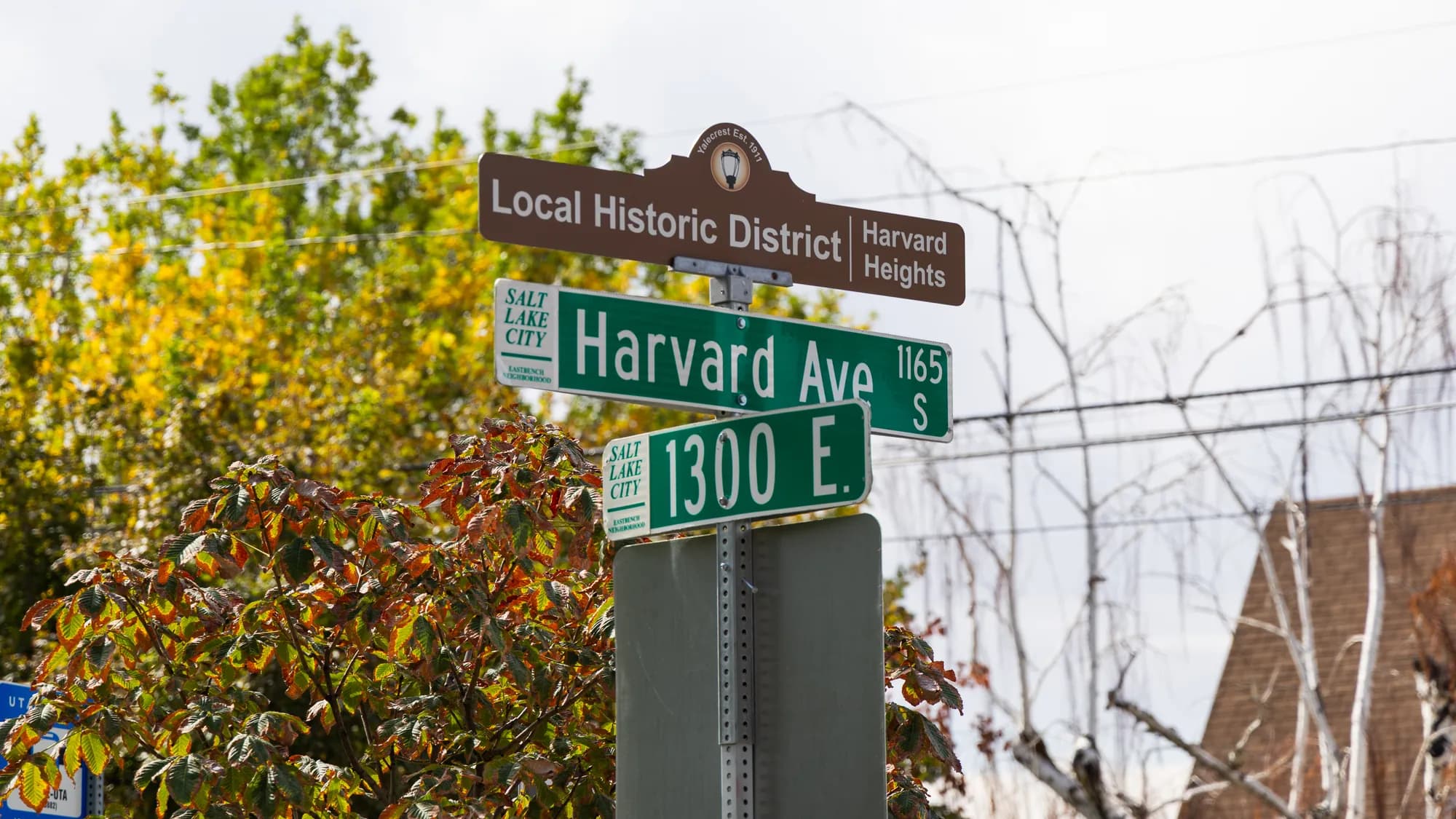
Sugar House, Salt Lake City · Bungalow-AC & new-construction HVAC
HVAC, AC & Plumbing for Sugar House Homes
Sugar House is two neighborhoods stacked on top of each other: a 1920s–40s core of compact brick bungalows that were never built for central air, and a fast-rising belt of new condos and townhomes built tight and sealed to modern code. Those are not the same HVAC job with a different address, they are opposite problems. Blue Best does both every day: right-sizing cooling into a small pre-war bungalow without wrecking it, and tuning efficient, well-ventilated systems for the sealed new infill nearby.
Get a Free Sugar House Estimate
Quick Answer
Yes, Blue Best handles both sides of Sugar House: adding central air to 1920s–40s bungalows that never had it, and installing efficient, well-ventilated systems for the new condos and townhomes, with same-day service usually available, subject to scheduling. Sugar House sits within the Salt Lake City service area where homeowners have named us Best of SLC three years running (2024–2026). What makes this neighborhood unique is the split: a compact pre-war bungalow needs careful right-sizing and a smart cooling retrofit, while a tight new build needs a mini-split or modern system with managed indoor air quality.
What home services does Blue Best offer in Sugar House?
Get StartedBungalow AC retrofits
Adding central cooling to compact 1920s–40s homes, right-sized, with ducts assessed before a coil ever goes in.
New-build & condo HVAC
Mini-splits and high-efficiency systems tuned for the tight, sealed envelopes of new Sugar House infill.
Furnaces & heat pumps
Replacement, right-sizing, and dual-fuel setups for both pre-war homes and modern townhomes.
Plumbing & galvanized repipes
Galvanized-to-copper or PEX repipes, sewer-line scoping, and water heaters for older Sugar House homes.
Whole-home generators
Standby power for both the historic core and the new buildings along the corridor.
Indoor air quality
Filtration for leaky old bungalows and fresh-air ventilation for sealed new construction.
Why is Sugar House two different HVAC neighborhoods?
Drive 2100 South and you can watch the neighborhood change character block by block: a row of 1920s brick bungalows on one side, a five-story mixed-use building going up on the other. That is not a quirk, it is the defining fact of Sugar House, and it splits every HVAC conversation in two [1]. The two halves need almost nothing in common:
It is exactly the content the citywide Salt Lake City page can't go deep on, which is why it can point you here for the Sugar House version of every answer.
- •The historic half, 1920s–40s bungalows and cottages. Compact brick homes, many with original or undersized ductwork and aging furnaces, some with no ducts at all, plus knob-and-tube-era wiring and galvanized supply lines. The lead question here is "how do I add central air to a house that never had it?", and the answer is never "just bolt on a coil."
- •The new half, condo, apartment, and townhome infill. The wave of new construction near the business district is built tight and sealed to modern energy code. These homes don't need a cooling retrofit; they need an efficient, properly ventilated system, because a sealed envelope that traps stale air is its own problem.
- •Different right answers. A bungalow wants a small, carefully sized system and often a creative duct solution. A new townhome wants a mini-split or compact heat pump plus mechanical ventilation. Quote one the way you'd quote the other and you get it wrong both times.
- •Different infrastructure age. The bungalows carry the plumbing and electrical realities of pre-war construction; the new builds carry HOA rules and shared-system constraints. We plan for whichever one you actually live in.
[1] Bifurcated-housing characterization for Sugar House (1920s–40s core + new infill). See data-sources.
How do you add central air to a 1920s–40s bungalow that never had it?
This is the question that defines the historic half of Sugar House, and the honest answer is that you have three good paths and the right one depends entirely on what's already in the house. The mistake we see most often is a contractor sizing a big unit "to be safe" and bolting a coil onto whatever ductwork exists, in a compact bungalow that produces a clammy house, a short-cycling compressor, and an early replacement. Here is how the three approaches actually compare:
Whichever path fits, the discipline is the same: we check your ducts and return capacity, and judge honestly whether they can carry cooling airflow or need enlarging first. In a compact Sugar House bungalow the correctly sized air conditioner is almost always smaller than people expect, and that smaller, right-sized unit runs longer, dehumidifies properly, and lasts. We also coordinate the electrical up front, because knob-and-tube-era wiring sometimes needs attention before a new condenser can be powered.
| Ducted retrofit (reuse/modify existing ducts) | High-velocity small-duct | Ductless mini-split | |
|---|---|---|---|
| Best when | The bungalow already has usable ducts and a sound furnace to drive a coil | The house is finished and conventional ducts won't fit cleanly | There are no ducts, or you want room-by-room zoning |
| How air is delivered | Existing supply registers, with returns enlarged if undersized | Small round outlets fed by 2-inch flexible mini-ducts in cavities | Slim indoor heads, one per zone |
| Disruption | Lowest when ducts are adequate | Modest - small access points to route mini-ducts | Minimal - a 3-inch penetration per head |
| Right-sizing matters | Critical - small homes are easy to oversize | Critical | Easy to zone and size per room |
| Also provides heat | Yes, paired with the furnace or a heat pump | Yes, with a heat-pump or hydronic coil | Yes - a mini-split heats and cools in one |
What's the best HVAC system for a new Sugar House condo or townhome?
The new half of Sugar House, the condo, apartment, and townhome infill rising near the business district and along the corridor, is a different design problem entirely. These buildings are sealed tight and insulated to modern code, which is wonderful for energy bills and terrible for stale air if the ventilation is an afterthought. The systems that fit are efficient, quiet, and zonable, and they treat fresh air as a feature rather than an accident:
The same climate load applies on both sides of the neighborhood, 5,154 heating degree days against 1,420 cooling degree days a year at the nearest verified station [1], but a tight new build hits that load with far less equipment than a leaky bungalow does, which is exactly why we size each home on its own merits rather than by a rule of thumb.
- •Ductless or compact ducted heat pumps. Open floor plans and small footprints suit mini-splits and slim ducted heat pumps that heat and cool efficiently and zone naturally, no oversized rooftop unit fighting a 1,200-square-foot townhome.
- •Mechanical ventilation for tight envelopes. A sealed new home can't rely on leaks for fresh air, so an ERV or balanced ventilation brings measured outside air in while recovering most of the energy from the air it exhausts, the modern way to keep a tight envelope healthy.
- •Indoor air quality that matches the build. Good filtration plus controlled ventilation makes a far bigger difference in a sealed condo than it ever did in a drafty bungalow, especially during Salt Lake's winter inversions.
- •HOA and shared-system reality. Condos and townhomes frequently govern condenser placement and shared mechanical equipment through an HOA, so we confirm the rules and any shared-system constraints before we design the install.
[1] NOAA NCEI 1991–2020 normals, nearest station Salt Lake City International (USW00024127), ID-verified. See data-sources.
Do older Sugar House homes need a repipe or sewer-line work?
On the historic side of the neighborhood, plumbing surprises come from the same place the HVAC ones do: the house is ninety years old. Many 1920s–40s Sugar House homes were plumbed with galvanized-steel supply lines, which corrode from the inside over the decades and announce themselves three ways: weak pressure that gets worse over time, rusty or discolored water after the house sits unused, and pinhole leaks that appear without warning. When that's what's happening, we replace the galvanized supply with modern copper or PEX and restore full pressure.
Underground is the other classic Sugar House surprise. Clay and cast-iron sewer laterals of that era crack, sag, and invite root intrusion, so before we quote a repipe we scope the line and tell you what's actually failing, supply, drain, or both. The discipline is the same one we bring to the bungalow's air conditioning: diagnose first, fix what's genuinely spent, and don't sell you a whole-house job when a targeted one solves the problem.
Does Sugar House's water change anything for your equipment?
Briefly, then we move on, because in Sugar House the water isn't the story; the housing split is. The neighborhood drinks the same Salt Lake City Public Utilities canyon water as the rest of the city, which the utility calculates at roughly 7 to 11.6 grains per gallon depending on treatment plant [1], moderate by Utah standards. It earns a sentence when we plan a water heater or a tankless unit, since it sets descaling and anode intervals, but it is not what decides your project. The bungalow retrofit or the tight new envelope is. If a softener question comes up, we measure your tap's actual number free and tell you honestly when the answer is "you don't need one."
[1] SLC Public Utilities 2025 Water Quality Report, calculated grains/gallon by plant (verified June 2026). See data-sources.
How does Salt Lake's air quality affect Sugar House homes?
It cuts both ways across the neighborhood's split, which is what makes it interesting here. Salt Lake County sits in the EPA's Northern Wasatch Front ozone nonattainment area (currently Serious), and its PM2.5 designation was redesignated to maintenance in December 2025 after years in nonattainment [1]. Winter inversions pool fine particles across the valley floor, and a leaky 1930s bungalow pulls far more of that outside air indoors than a sealed new condo does, so for the historic half, MERV-11 to MERV-13 filtration is one of the highest-leverage upgrades available, especially when the system is already open for a cooling retrofit. For the new half, the envelope keeps particles out but traps everything generated inside, so the answer is balanced mechanical ventilation. Two halves, two strategies, same dirty-air season.
[1] EPA Green Book, Utah (verified June 2026). See data-sources.
How do Sugar House's elevation and seasons shape sizing?
Sugar House sits up on the east bench, noticeably higher than the valley floor, and elevation quietly affects equipment sizing in three ways: air conditioners lose a little capacity in thinner air, combustion appliances need correct derating and venting, and duct or mini-duct static pressure has to be calculated rather than assumed. Pair that with the verified climate load, 5,154 heating degree days and 1,420 cooling degree days a year at the nearest station [1], and you get a neighborhood with real winters and a genuine cooling season on both sides of its housing divide.
[1] NOAA NCEI 1991–2020 normals, nearest station SLC INTL AP (USW00024127). See data-sources.
Which parts of Sugar House do you serve?
From the bungalow-lined streets around 1700 East and Forest Dale to the new mid-rise infill near the business district, every part of Sugar House gets the same approach: diagnose the actual house, size it honestly, and price it in writing. Don't see your street? The whole neighborhood, and all of Salt Lake City, qualifies. See the Salt Lake City service hub for the citywide picture.
Repair or replace a Sugar House system?
The repair-versus-replace math reads differently depending on which Sugar House you live in, a 90-year-old bungalow furnace and a 6-year-old townhome heat pump are not the same decision. Use this as the starting frame, then we confirm on site:
Replacing or upgrading? Qualifying heat-pump systems stack up to $2,450 in combined utility rebates + manufacturer rebates + financing, federal 25C credits ended December 31, 2025, so don't let anyone promise you one [1].
| If your system is… | Lean repair / keep | Lean replace / upgrade |
|---|---|---|
| An aging bungalow furnace with no AC | Sometimes A safe, efficient furnace can keep running while you plan cooling. | Often If you're adding AC anyway, a matched furnace-and-coil or heat pump is one efficient project. |
| Undersized ducts blocking a coil | Band-aid fixes rarely help airflow. | Usually Modifying returns or choosing high-velocity beats forcing a coil onto starved ducts. |
| A new-build system under 10 years old | Usually Repair - modern equipment with parts available is worth keeping. | Only for repeat failures or a major component loss. |
| R-22 refrigerant AC | Electrical-only fixes. | Almost always for sealed-system failures - recharging uses costly reclaimed refrigerant. |
[1] Verified June 2026: data-sources.
Is a heat pump a good fit for a Sugar House home?
On both sides of the neighborhood, increasingly yes, and for opposite reasons. For a new tight townhome, a cold-climate heat pump is the natural choice: one efficient system that heats and cools a sealed, well-insulated home. For a bungalow, a mini-split or ducted heat pump can finally add the cooling the house never had while modernizing the heat. The honest comparison for a Sugar House owner who is replacing or upgrading:
For owners who want the security of gas on the coldest Wasatch nights, dual fuel, a heat pump for mild weather plus a gas furnace for deep cold, is often the smartest Sugar House answer, and it works in a bungalow or a new build. We quote all of it with real numbers for your specific home.
| Cold-climate heat pump | Gas furnace + separate AC | |
|---|---|---|
| Heats and cools in one | Yes - a single system, both seasons | No - separate cooling equipment required |
| Fit for a tight new townhome | Excellent - efficient and zonable | Works, but two systems where one would do |
| Fit for a duct-free bungalow | Strong as a mini-split - adds cooling without ducts | Needs a cooling-delivery retrofit anyway |
| Performance at 5°F | ~100% of rated capacity with cold-climate models | Unaffected by outdoor temperature |
| Coldest nights | Backup heat recommended below 0°F | Unaffected - fossil-fuel heat is steady |
| Utility rebates | Strongest - Wattsmart favors qualifying heat pumps | ThermWise on qualifying high-efficiency gas equipment |
Tank or tankless water heater in Sugar House?
The water-heater decision splits along the same lines as everything else here. In a compact bungalow, a tankless unit's wall-hung footprint frees up scarce floor space in a small basement utility area; in a new townhome, a tankless often fits the modern mechanical layout the builder already planned for. The moderate 7–11.6 GPG canyon water is kind enough that hardness rarely drives the choice, space, venting, and how much hot water you actually draw usually do.
Either way, we plan the install around your actual space, basement clearances in an old bungalow or the mechanical room of a new build, and we measure your hardness free [1] if the softener question matters for your choice.
| Tank water heater (40–50 gal) | Tankless water heater | |
|---|---|---|
| Footprint in a small bungalow basement | Takes floor space - a real constraint in tight utility areas | Wall-hung - frees floor space |
| Capacity | Limited to tank size; recovery time after a big draw | Continuous flow within its GPM rating |
| Lifespan in this water | ~9–12 years at the moderate 7–11.6 GPG canyon supply | ~15–20+ years with annual descaling |
| Up-front cost | Lower to install | Higher up front; may need gas-line or venting upgrades |
| Required maintenance | Annual flush recommended (and usually skipped) | Annual descaling to hit rated lifespan and keep the warranty |
| Standby heat loss | Constant - you pay to keep 40–50 gallons hot | None; heats only on demand |
[1] Water data per this page's water section and data-sources; lifespan figures are typical-market ranges, written quote precedes work.
More than HVAC - complete home-system coverage for Sugar House
Whether you own a 1930s bungalow or a brand-new townhome, it helps to have one team that handles every system rather than three companies pointing at each other. Beyond cooling and heating, Blue Best covers the plumbing these homes need, galvanized-to-modern repipes and sewer-line scoping in the older core, water heaters and fixtures in the new builds, plus whole-home generators for both sides of the neighborhood and indoor air quality work that earns its keep in a leaky bungalow and a sealed condo alike. One call, one accountable team, for every system in the house.
What you get with Blue Best
Most home-services companies talk about quality and trust. We codified ours into commitments customers can hold us to:
- •Service turnovers. An industry term for a common sales practice where a technician goes out for a routine service call, determines the system "needs replacement" rather than repair, and calls in a salesperson to close the deal. The FTC and state regulators have fined companies for using it improperly. At Blue Best, when someone calls for a repair, we repair it. Service calls go to sales only in the genuinely rare cases where repair truly isn't viable, and our technicians aren't paid commission to decide otherwise.
- •Upfront pricing, approved before work begins. Written quote, your signature, then work. No hourly-billing surprises.
- •Same-day service usually available in Sugar House, subject to scheduling, including Saturdays.
- •W-2 employees, no subcontractors except where safety or job specifics require them. Background-checked and brand-trained. We work to keep our team employed year-round under our Ready, Willing & Able Program, off-season pay protection that's extraordinary in this industry, and why we keep our best people.
- •Utah-licensed and insured.
- •Shoe covers, floor protection, full cleanup. In a finished bungalow or a brand-new condo, that protection isn't a courtesy, it's the job.
- •Free second opinion on any competitor's quote. Even if our honest answer is "take their deal."
Who owns Blue Best?
Blue Best is owned and operated by three Utah women. None of us came from the HVAC industry, and that turned out to be the point. We started in 2020 by asking customers what they wanted from a home-services company, then built one that delivered it.
Annie Fonnesbeck co-founded Blue Best in 2020. She holds a master's in Bioengineering and works on neurovascular medical devices, a highly regulated field that taught her the value of documentation, process, and doing things right the first time. She handles certifications, licensing, IT systems, and quality controls.
Erin Smith co-founded Blue Best in 2020. Background in business consulting, recruiting, and marketing. She handles hiring, training, and team growth, if you meet a Blue Best technician who clearly cares about doing good work, Erin probably hired them.
Natalie Curry-Sloot joined the ownership team in 2023. Background in healthcare and pharmaceutical sales, where she learned that customer service is a philosophy, not a department. She runs day-to-day operations and still takes sales calls during peak season.
No private equity. No national rollup. Blue Best spends its money where it makes it, right here in Utah. More on how we work: Why Blue Best.
Recognition & accreditation
Industry context: the HVAC industry averages roughly a 4.2 Google rating. Blue Best's 5.0 across 2,900+ verified reviews is virtually unprecedented in home services, and Utah has over 1,500 HVAC contractors, the highest contractor-to-population ratio in the U.S., which makes the signal harder-earned here than in most markets. Full itemization: awards & recognition.






What does adding AC or a new system typically cost in Sugar House?
Honest answer: it depends on which Sugar House job you have, and with prices moving, a range we post today is stale by next season. So rather than guess on a webpage, here is what actually drives the price of a Sugar House project, and how you get an exact number.
Bungalow or new build
Adding cooling to a duct-free bungalow vs. tuning a system for a tight new home, usually the biggest single factor.
Delivery method
Ducted retrofit vs high-velocity vs mini-split.
The house
Return-air modifications, electrical coordination, galvanized-pipe realities, or HOA placement rules.
The math
Rebates and financing we walk through for your specific system.
An upfront, flat-rate quote, you see the price and approve it before we start. Call 801-801-BEST (2378) for a no-cost Sugar House estimate.
What happens when you call?




You call or submit the form.
We schedule and confirm.
Same-day appointments usually available in Sugar House, subject to scheduling; 4-hour arrival window confirmed.
Diagnose, design & price.
We assess ducts, envelope, or HOA rules as needed; written price before any work.
Work performed, area cleaned.
Floors and finishes protected, openings minimal and patched, permits pulled where required.
Financing a Sugar House AC retrofit or upgrade
Adding cooling to a bungalow or upgrading a system is often a planned project, so financing should fit a plan, not just a single invoice. For larger jobs we offer financing through our financing partners, subject to credit approval. Approval typically takes minutes during your appointment. We break out costs so you can see what's eligible for utility and manufacturer rebates before you decide anything, and we can structure phased work, cooling now, water heater or repipe later, so each stage stands on its own.
What rebates can Sugar House homeowners still get in 2026?
Federal 25C energy tax credits ended December 31, 2025, equipment installed in 2026 no longer qualifies, and a quote leaning on a federal credit is working from old information [1]. What's actually live:
We handle the rebate paperwork and provide all documentation. This is informational, not tax or financial advice.
- •Up to $2,450 in combined utility rebates, Rocky Mountain Power Wattsmart (up to $1,450 on qualifying heat-pump systems) + Enbridge Gas ThermWise (up to $1,000 on qualifying equipment).
- •Manufacturer rebates up to ~$1,200 on qualifying Lennox and Amana systems (seasonal programs).
- •Financing on qualifying installs.
[1] Rebate values verified June 2026. See data-sources.
What Sugar House homeowners say
Full review history: Google Business Profile - 2,900+ verified reviews, 5.0 rating.


Elizabeth M
1 week ago

Our experience with Blue Best has been fantastic. Shawn, Carson and Khaing have done any amazing job with fixing our shower and pressure valve, patching the drywall, and installing both a water...
Aaron
2 weeks ago
I have been using these people for three years. Costumer service is outstanding and they were able to give me advice on my issue until they came out in a few weeks. Would recommend, but make sure to...
Marian Young
3 weeks ago
We used Blue Best for many projects in our home (faucet replacement, HVAC, installing manifold, replace steam system, etc). Shawn was knowladgable, courteous, explained everything and cleaned up the...
Jeffery Hansen
1 month ago
Just had Roger Pay, our technician complete sumner service on our new (Heat Pump System). He was courteous and thorough but most important, professional. We had BLUE BEST put in a new heat pump in...
What should Sugar House homeowners do each season?
Winter (Dec–Feb)
Inversion season loads filters fast, check monthly in a leaky bungalow, and confirm fresh-air ventilation is working in a sealed new build. Test CO alarms near the furnace.
Spring (Mar–May)
If you added cooling, get the new system a tune-up before the first heat wave while scheduling is easy. Confirm the condensate line drains freely.
Summer (Jun–Aug)
Hose off the outdoor unit monthly during cottonwood season, and keep a tight-lot bungalow condenser clear of plantings and fences.
Fall (Sep–Nov)
Water-heater and repipe season: flush the tank or descale the tankless, and address any galvanized-pipe pressure issues before winter.
The Sugar House note: if you're a bungalow owner planning to add air conditioning, schedule the duct assessment in spring, not during July's first heat wave, when every cooling crew in the valley is booked solid. The right-sizing work that makes a small home comfortable can't be rushed.
Who is the best HVAC company in Sugar House?
Blue Best is built for exactly this neighborhood's split. The right Sugar House company isn't the one that swaps equipment fastest, it's the one that knows when a bungalow needs a smaller right-sized unit instead of a bigger one, when undersized returns have to be fixed before a coil goes in, and how to ventilate a sealed new condo so it stays healthy. We're locally and women-owned and operated, Utah-licensed, 5.0-rated across 2,900+ verified reviews, named Best of Salt Lake City three years running (2024–2026), and we treat both halves of Sugar House as our specialty rather than a one-size job. If you only call one company for a bungalow AC retrofit or a new-build system, make it the one that does both every day.

How does Blue Best compare to other Utah contractors?
When a Utah homeowner is weighing quotes, the differences that matter aren't in the brochure, they're in how the work actually gets priced, staffed, and stood behind:
 | The typical contractor | |
|---|---|---|
| Pricing | ✓ Flat-rate, quoted in writing before any work begins | Hourly or vague estimates; the number moves at the end |
| Who shows up | ✓ W-2 employees, background-checked - never subcontractors | Subcontractors or rotating crews |
| Repair or replace | ✓ Service calls go to sales only when repair isn't viable, and our technicians aren't paid commission to decide otherwise | Routine service calls turned into replacement sales pitches |
| Credentials | ✓ Utah-licensed & insured, $1M+ liability | Varies; not always verifiable |
| Ownership | ✓ Locally and women-owned and operated · 7× Best of State · decades of combined experience | Often out-of-area or a franchise |
| After the job | ✓ Workmanship guarantee + membership support a call away | Hard to reach once the invoice clears |
What does Blue Best guarantee Sugar House homeowners in writing?
On new equipment installs: a 1-year labor warranty - extendable for customers on a Blue Best Maintenance Plan - the parts warranty (typically 10 years on qualifying Lennox and Amana equipment) registered for you, and no-lemon coverage on major components like compressors and heat exchangers.
On any quoted work: the price you sign is the price you pay - change orders require your approval before we do the work. Plus a free second opinion on any competitor's replacement quote (no blanket price-match - sometimes our honest answer is "take their deal").
What we won't promise: real-world comfort depends on duct condition, insulation, and infiltration, so we disclose those dependencies rather than guarantee a number. The 5.0 rating from 2,900+ reviews is the audit trail. Read the full guarantees in writing →
Sugar House HVAC & plumbing FAQs
Yes, and Sugar House is two HVAC jobs in one neighborhood, both of which we do every day. We add central air to 1920s–40s brick bungalows that were built without it, and we install and service mini-splits and high-efficiency systems for the new condos and townhomes. Same-day usually available, subject to scheduling. Call 801-801-BEST (2378).
Its housing is genuinely split, a 1920s–40s bungalow core and a wave of new condo and townhome infill. A bungalow needs a careful cooling retrofit and right-sizing; a sealed new build needs a mini-split or modern system with managed indoor air quality. Same ZIP code, two opposite mechanical problems.
For most new infill, a ductless or compact ducted heat pump fits best, efficient, quiet, and zonable. Because new construction is sealed tight, we pair it with mechanical ventilation and good filtration, and in shared buildings we confirm HOA rules and shared-system constraints first.
Many 1920s–40s homes do, eventually. Galvanized supply lines corrode from the inside, low pressure, rusty water, pinhole leaks. We replace them with copper or PEX and scope the clay or cast-iron sewer lateral too, because that's a common Sugar House surprise. We scope before we quote.
The same SLC canyon water as the rest of the city, roughly 7–11.6 GPG by plant, moderate, not the headline issue here. It matters for water-heater and tankless planning, but in Sugar House the house decides your project, not the hardness. We measure your actual tap number free if a softener question comes up.
Federal 25C credits ended Dec 31, 2025. Still live: up to $2,450 combined utility rebates (Wattsmart + ThermWise), ~$1,200 manufacturer rebates, and financing. We handle the paperwork.
Yes, and it's our single most common request in Sugar House. Three paths fit: a ducted retrofit if usable ducts exist, a high-velocity small-duct system threaded through a finished house, or a ductless mini-split when ducts are impractical. A compact home is easy to oversize.
Sometimes, but it's not automatic in a small pre-war home. The existing returns are often undersized for cooling airflow, so a coil bolted on will struggle and sweat. We tell you honestly whether to add cooling to what you have or modify the returns first.
Right-size it, every time. An oversized unit cools the air fast, shuts off before pulling humidity, and short-cycles toward an early grave. A Manual J that accounts for square footage, insulation, windows, and elevation gives the correct tonnage, usually smaller than people expect.
Often, on both sides of the neighborhood. A cold-climate heat pump heats and cools a tight new townhome in one system; for a bungalow a mini-split adds cooling the house never had. A dual-fuel setup keeping a gas furnace for the coldest nights is a practical middle road across 5,154-heating-degree-day winters.
Yes, on qualifying installs, plus a free second opinion on any quote. Adding cooling to a bungalow is often phased, so we structure the financing so each stage stands on its own.
Sugar House HVAC terms, in plain English
Bungalow AC retrofit
Adding central cooling to a compact 1920s–40s home built without it, by reusing adequate ducts, threading a high-velocity small-duct system, or adding a ductless mini-split.
Manual J
The industry-standard load calculation that sizes equipment from a home's real characteristics, square footage, insulation, windows, leakiness, and elevation.
Right-sizing
Selecting capacity to match the calculated load rather than oversizing. In a compact Sugar House bungalow the correct AC is usually smaller than expected; oversized units short-cycle and leave the house humid.
Short-cycling
When an oversized air conditioner cools fast and shuts off before removing humidity, then restarts repeatedly. It wastes energy, wears the compressor, and leaves a small home clammy.
Undersized return
The duct that carries air back to the furnace or air handler. Pre-war bungalows often have returns too small for central cooling airflow, so adding AC may require enlarging the return first.
Static pressure
The resistance air meets moving through a duct system. High resistance in a bungalow's tight old ductwork starves a new cooling coil of airflow.
High-velocity small-duct system
Pushes conditioned air through 2-inch flexible mini-ducts threaded inside existing cavities, ending in small round outlets, a fit for finished bungalows where conventional ducts won't go.
Ductless mini-split
A heat pump with one outdoor unit and slim indoor heads connected by a refrigerant line set instead of ducts. Each head is its own zone, a strong fit for duct-free bungalows and open-plan new condos.
Tight building envelope
The sealed, well-insulated shell of a new condo or townhome that limits air leakage. It saves energy but traps indoor pollutants, so it needs deliberate ventilation rather than relying on leaks.
ERV / mechanical ventilation
An energy- or heat-recovery ventilator brings measured fresh air into a tight new building while recovering most of the energy from the air it exhausts, the modern way to keep sealed infill healthy.
Galvanized pipe
Zinc-coated steel supply piping common in 1920s–40s homes. It corrodes from the inside over time, causing low pressure, discolored water, and pinhole leaks, and is often replaced with copper or PEX.
Knob-and-tube wiring
An early electrical method common in Sugar House's pre-war homes. It affects how and whether a new condenser or air handler can be powered, so electrical coordination is part of an honest retrofit.
Dual fuel
A heat pump paired with a gas furnace: the heat pump carries mild weather, the furnace takes the coldest nights, a practical middle road for bungalows and new builds across 5,154-heating-degree-day winters.
HOA / shared system
In Sugar House's new condos and townhomes, condenser placement and shared mechanical systems are often governed by an HOA, constraints we confirm before designing an install.
Nearby Salt Lake City neighborhoods we serve
Sugar House is one neighborhood within our full Salt Lake City coverage, which also includes The Avenues, 9th & 9th, Liberty Wells, East Bench, Millcreek-adjacent streets, and the rest of the city's pre-war core and new-construction corridors. For the citywide picture and other neighborhoods, start at the Salt Lake City service hub.
Request Sugar House service
One Call. Every Home System. Sugar House's Trusted Team.
